Safety & Risks
Why a Self-Clean Cycle Is the Riskiest Thing an Old Oven Does
A self-clean cycle heats the cavity far above any cooking temperature and holds it there for hours, which is a load nothing else the oven does comes close to. On an aging appliance that is where a marginal door lock, a tired thermal cut-off or a control board on its way out finally gives up, and the appliance comes out of the cycle worse than it went in. Frigidaire-built 790 ranges publish a whole group of door-lock codes for exactly this, the F9 family. The one instruction that matters is this: if the door will not open after a self-clean, let the oven go completely cold and never lever at it. The latch is a motorized mechanism that will not release until the cavity is below a safe temperature, and forcing it turns a released latch into a broken one.
The full guide
Kenmore self cleaning oven problems: the cycle is a stress test
This is not folklore and it is not an attempt to sell anybody a maintenance plan. It is arithmetic.
A self-clean cycle takes the cavity far above any temperature you would ever cook at and holds it there for several hours, because that is the only way to reduce baked-on residue to ash. Every component around that cavity — the door latch motor, the thermal cut-offs, the wiring at the back, the control board and the sensor — is being asked to survive conditions it meets a handful of times in its life.
On a machine in good order, it does. On a machine where something was already marginal, this is the afternoon it stops being marginal.
What actually gives up
The door latch. A motorized mechanism drives the door locked at the start and unlocked at the end. Frigidaire-built ranges publish a whole family of codes for this group — the F9 numbers — because it is common enough to deserve one. A latch that was sticking slightly before the cycle is a latch that does not release after it.
A thermal cut-off. These are protective devices, and running for hours at the top of the range is exactly what they exist for. One that opens has done its job; it also means the oven now does nothing at all.
The control board. Heat rises to the panel at the front, which is where the electronics live. A board that has been quietly degrading for years often finishes doing so during a self-clean.
The oven light and the seals. Trivial by comparison and worth mentioning because people are surprised. Bulbs do not survive the cycle unless they are rated for it, and the door seal ages faster with every run.
The one instruction that matters
If the door is locked after the cycle: let the oven go completely cold, and do not lever at it.
Most latches are temperature-interlocked and simply will not release while the cavity is above a safe temperature. Cold means several hours, not one — a cavity that has been at self-clean temperature holds heat for a long time.
A door prised at is a door that comes off its hinges or takes the latch mechanism with it, and turns a part into a panel. There is no situation in which forcing it is faster.
The three ways a door can be locked
Worth separating, because they look the same from the kitchen and only one of them is a problem.
A control lock — the panel is locked and the door still opens. Cleared by holding the lock key.
A self-clean latch that has not released — the door will not open at all. Time and patience, then a repair.
A dead panel — nothing responds, so nothing can be cleared. That is a control question rather than a lock one.
Before you press it
Three minutes of preparation removes most of the risk.
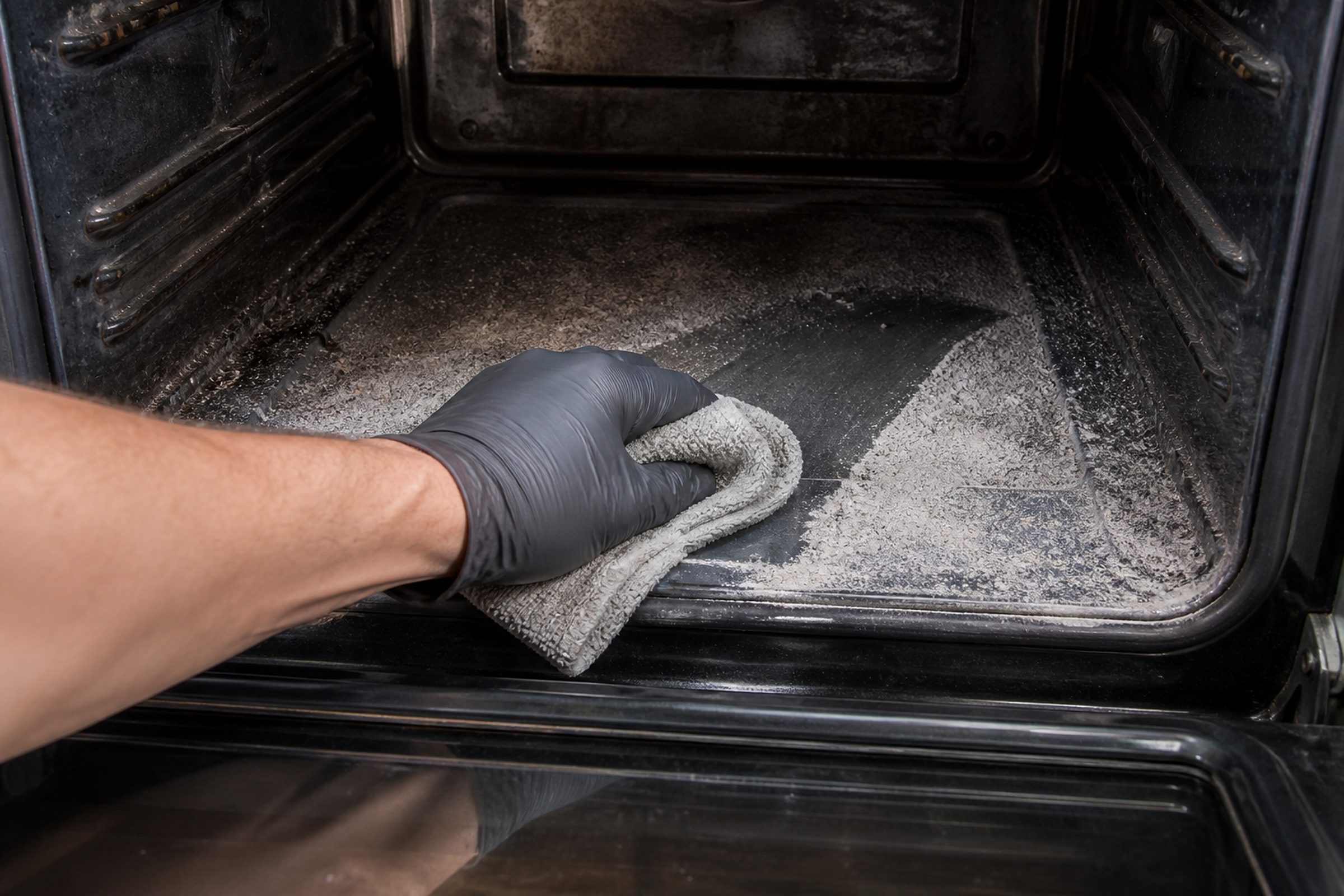
Scrape the worst out by hand. The cycle is for the film that will not come off; a pool of grease in the base produces a great deal of smoke and an unnecessary amount of heat.
Take the racks out unless the manual specifically says they are rated for it. Most discolor and lose their easy slide permanently.
Ventilate, and move anybody with breathing trouble and any bird out of the kitchen for the duration.
Do not run it the day before you need the oven. That is the practical one. If this is the cycle where an aging appliance gives up, you want it to happen on a Tuesday rather than the morning of a family dinner.
And on an old oven, consider not running it at all
If the appliance is more than about ten years old, an afternoon with a scraper, a paste of baking soda and warm water does most of the job, carries none of this risk, and does not put a fifteen-year-old control board through the worst hours of its life.
That is a genuine choice rather than an evasion. The cycle exists, it works, and it is also the single most common event behind an oven arriving at us dead.
If it turns out to be a repair
What this leads to, and what it costs
Every job on this site is priced the same way: an on-site diagnostic first, the figure agreed in writing before anybody starts.
-
Oven door locked shut
Nearly always a self-clean cycle that has not completed or has not cooled, and nearly always resolvable without damage — provided nobody forces it. Forcing an oven door lock is how a modest repair becomes a hinge and a liner.
- Almost always a self-clean cycle
- Do not force it — that is the expensive mistake
- The lock holds until the cavity is genuinely cool
-
Frigidaire-built Kenmore range error code F90
Frigidaire wrote this code, not Kenmore. On a range wearing this badge, F90 means: Frigidaire's own label: a door lock issue. The whole F9x group is the locking mechanism. Which model prefixes can raise it, and what to do next.
What this one means -
Oven door lock repair
A door that locked itself during a self-clean cycle and will not release, or one that refuses to lock when it should. The mechanism is easy to damage by forcing, and a forced door turns a modest repair into a larger one.
- Nearly always a self-clean cycle that did not complete
- Do not force it — that is the expensive mistake
- Motor switch and control tested separately
Questions people ask about this
Should I never use self-clean?
On a newer oven in good order it is a designed function and there is no reason to avoid it. On an oven more than about ten years old it is worth knowing that the cycle is where these appliances tend to fail, and that a manual clean carries none of that risk.
The door has been locked for hours.
Let it go completely cold — several hours, not one. Most latches release on temperature alone. If it is still locked cold, that is a repair, and it is a small one compared with a forced door.
There was smoke and a smell.
Some smoke is expected from residue burning off. Heavy smoke means there was more in the cavity than there should have been: scrape the worst out by hand before running the cycle, and ventilate the kitchen while it runs.
My oven has an aqua-style low-heat clean instead.
Then it does not carry this risk. Those cycles work at ordinary temperatures with water and are a completely different proposition — and much less effective on baked-on residue, which is the trade.
Safety & Risks
More guides like this one
-
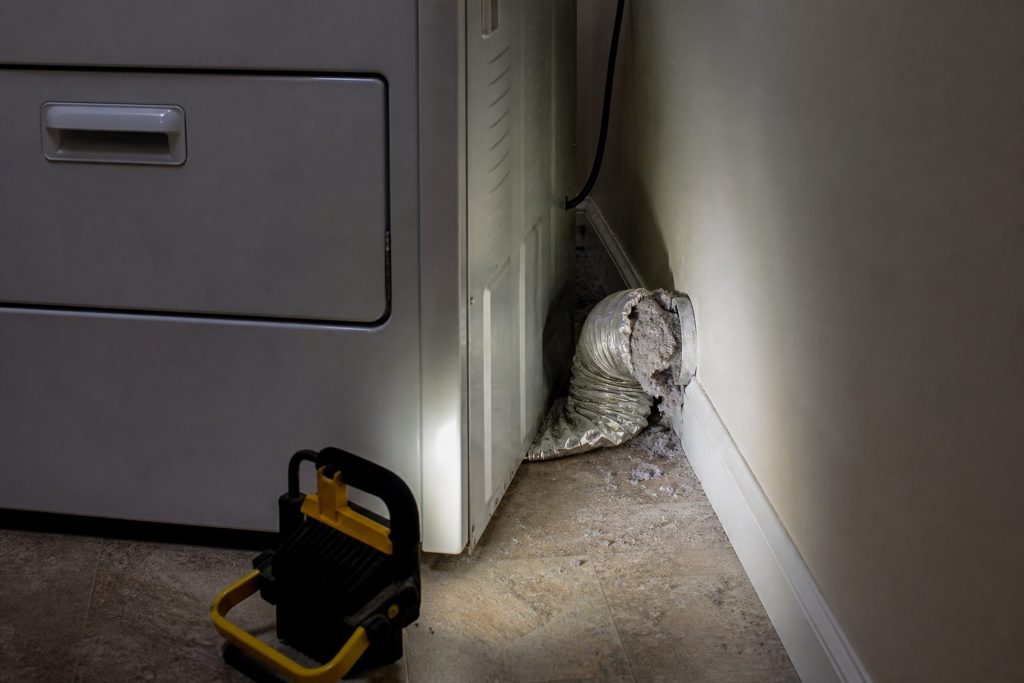
When a Kenmore Dryer Needs Two Cycles, It Is Usually the Duct
Three manufacturers built these dryers and all three publish a restricted-airflow warning, because in this climate the duct fills faster than any manual assumes.
Read more -
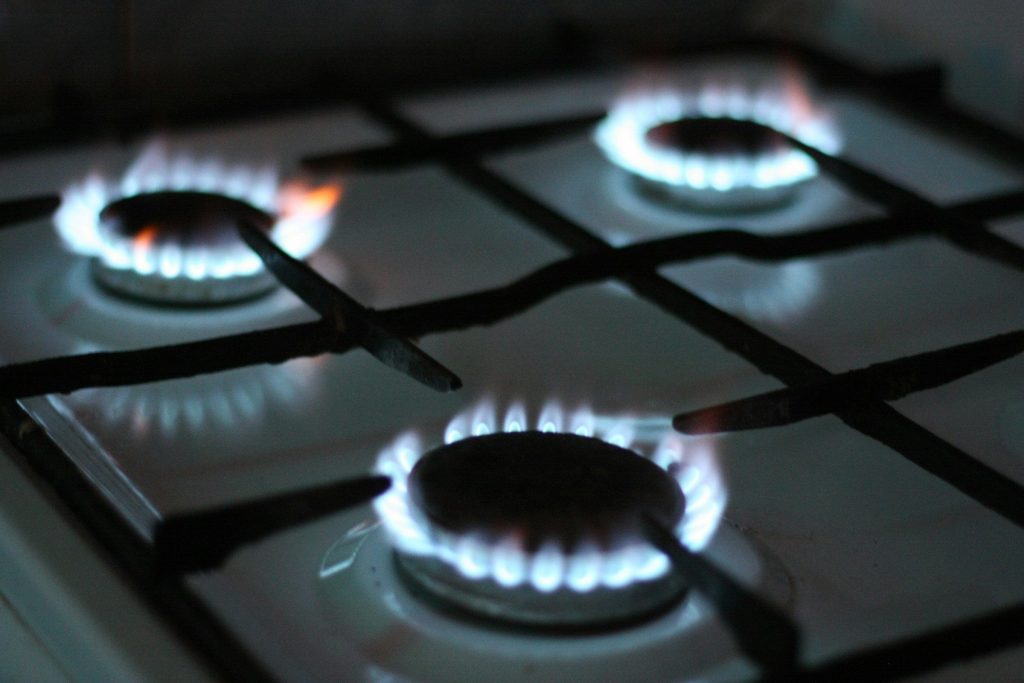
A Kenmore Gas Burner That Clicks and Will Not Light
Clicking means the spark system is alive, which rules out a great deal before anybody spends anything. Four things to check, in order, and one that means stop.
Read more
Tell us the model number and what it is doing.
This article is based on:
- Official manufacturer documentation
- Internal repair procedures
- Technician repair history
- Company quality standards