
Cost Expectations
When a Kenmore Is Worth Repairing, and When It Honestly Is Not
Is it worth repairing a Kenmore washing machine? Usually yes for anything mechanical, and it becomes a real decision for two repairs only: a sealed system on refrigeration and a control board on an older machine, because each can approach the value of the appliance. Two forces pull against each other on this badge. The machine was inexpensive to buy and is not built into cabinetry, so the replacement cost is low and the line moves earlier than it would on a built-in. But the parts belong to Whirlpool, LG, Frigidaire, GE or Bosch, with large catalogs and genuine availability behind them, so the ordinary repairs — pumps, valves, belts, rollers, elements, igniters, seals, thermistors — stay cheap and available for far longer than people expect.
The full guide
Is it worth repairing a Kenmore washing machine, or any of the others
This question gets a different answer on this badge than it does on the built-in brands, and it is worth understanding why rather than being handed a percentage.
Two forces pull in opposite directions.
The machine was inexpensive and it is not built into anything. A freestanding washer, dryer, range or top-freezer refrigerator can be replaced without a carpenter, without matching a panel to the joinery, and without a delivery crew taking a door off. That makes replacement genuinely easy, which pulls the line earlier than it sits on an appliance built into cabinetry.
The parts are a major manufacturer's parts. Because Kenmore built nothing, every component in the machine belongs to Whirlpool, LG, Frigidaire, GE, Broan, Roper or Bosch, sits in that company's catalog, and is supported by the volume of that company's own range. Pumps, valves, belts, rollers, elements, igniters, thermistors, seals and switches are cheap and available, often for far longer than the appliance was sold.
That second force is the one people underestimate, and it is the reason a fifteen-year-old machine wearing this badge is repairable when a fifteen-year-old machine from a small manufacturer often is not.
The repairs that are almost always worth doing
Anything mechanical, on any of these appliances, up to a fairly advanced age. A drain pump. A door seal. A belt and rollers. A heating element. An igniter. A lid switch. A thermistor. A hinge.
These are inexpensive parts, the labor is predictable, and the repair restores a machine that otherwise had years left in it. If a technician has told you the answer is one of these and the appliance is otherwise sound, the arithmetic is not close.
The two that are a real decision
A sealed system on refrigeration. Compressor, evaporator, refrigerant circuit. It is an order of magnitude beyond every other refrigeration repair, and on a mid-market cabinet it can approach what the appliance is worth. It is worth doing on a large, recent, well-specified refrigerator and it is rarely worth doing on an eight-year-old top-freezer.
A control board on an older machine. Boards are the part that goes obsolete first, they are expensive when they exist, and on machines beyond about fifteen years the only supply may be a rebuilt exchange. This is the single most common reason we tell somebody an appliance is finished.
What actually settles it
Not the age, and not a percentage. The diagnosis.
The useful question is not "how old is it" but "how many things are wrong with it". One worn part on a machine where everything else is healthy is a good repair at almost any age. Three separate issues at once on a machine of the same age is an appliance telling you where it is in its life, and the honest advice then is to spend the money on the next one.
That is why the diagnostic visit comes first and why we will not price a repair over the phone from a symptom. A guess made without opening the machine is not cheaper for you; it just moves the disappointment later.
The part people leave out
If you replace it, the new machine has to fit the space, the plumbing, the electrical supply and the doorway, and it has to be delivered and the old one taken away. On a freestanding appliance in a house that is usually straightforward and it is not always free — an opening built to an older width, a laundry closet with a door on it, a stacked pair with a kit that does not transfer.
Worth five minutes with a tape measure before deciding a repair is not worth it, because the comparison is not the repair against the sticker price. It is the repair against the whole exercise.
If it turns out to be a repair
What this leads to, and what it costs
Every job on this site is priced the same way: an on-site diagnostic first, the figure agreed in writing before anybody starts.
-
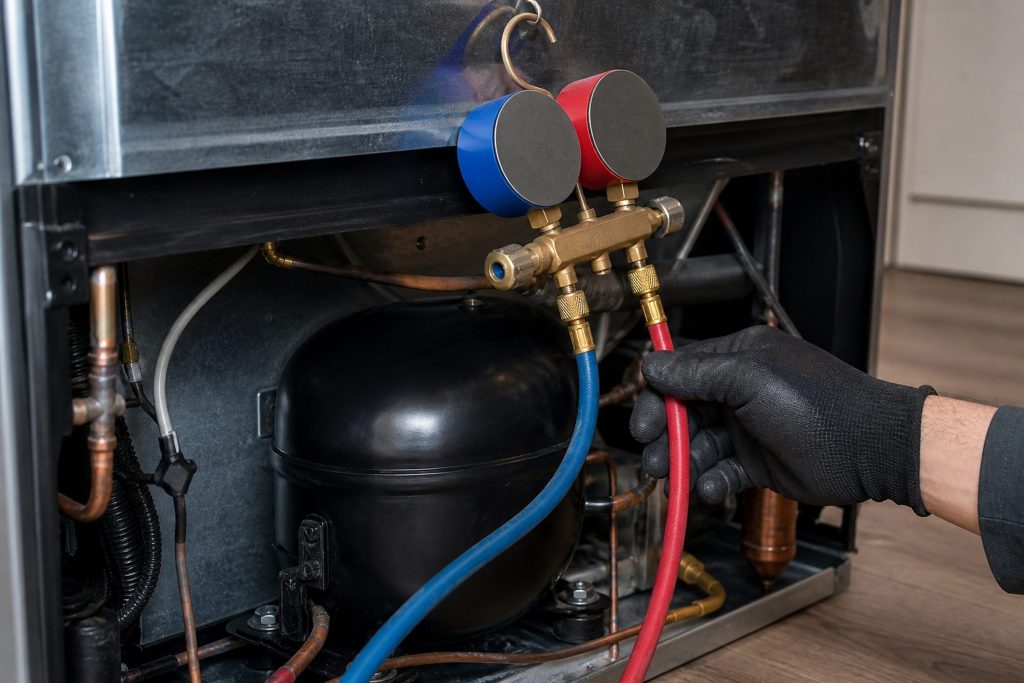
from $595 Sealed system repair
Compressor, condenser, evaporator and the refrigerant between them. It is real, it is the most expensive repair on a refrigerator, and it is quoted far more often than it happens. Everything cheaper is ruled out first, and on a mass-market cabinet we will tell you honestly when the repair no longer makes sense against the price of the appliance.
- Ruled in by measurement, never by elimination alone
- Licensed refrigerant work
- An honest replace-instead conversation where it applies
-

from $265 Appliance control board repair
The repair we rule in last and quote most carefully. A control board is the most expensive single part on most of these appliances, it is the easiest thing to blame, and on a mass-market unit it is the repair where replacing the appliance sometimes wins. We will say which.
- Ruled in by measurement, never by elimination
- Storm-season damage is a real local cause
- An honest replace-instead answer where it applies
-
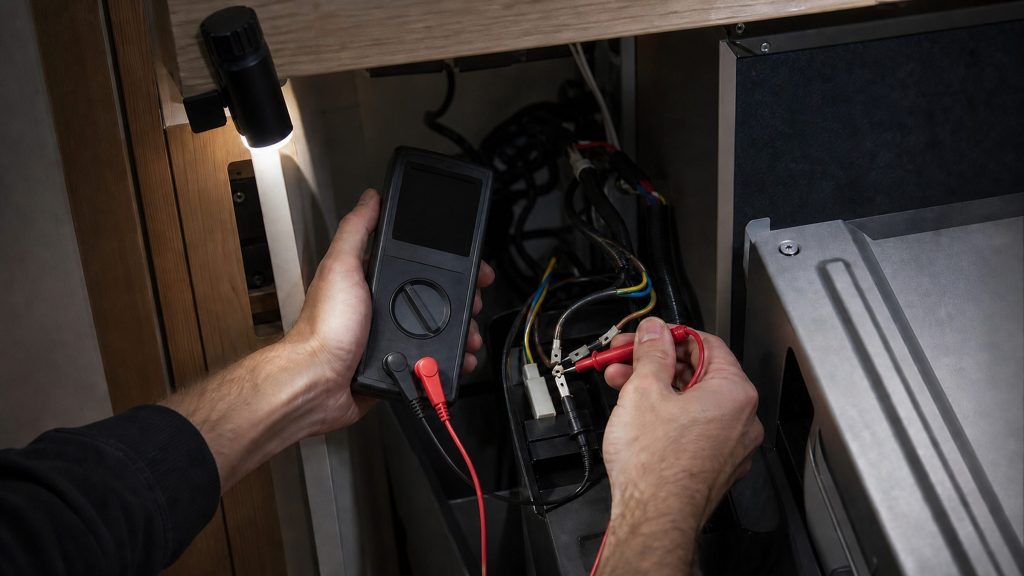
from $95 Diagnostic visit
Nobody names a part on this site until somebody has measured something. On this badge the visit starts one step earlier than it does on most makes: with the model number, because the first three digits tell us which manufacturer built the appliance and therefore which service documentation, which diagnostic sequence and which parts catalog apply. Arriving without that is guessing at three appliances at once.
- The prefix read first, then the appliance
- What it reports, measured rather than assumed
- Credited toward the repair when you go ahead

Questions people ask about this
Is there a rule of thumb, like half the replacement cost?
It is a starting point rather than a rule. What it misses is that a machine with one worn part and everything else healthy is a different proposition from a machine of the same age with three things going at once.
Are parts hard to get for an old one?
Less than you would think. The mechanical parts belong to enormous ranges and are still made. What genuinely disappears is cosmetic trim and control boards for machines beyond about fifteen years.
Does the age of the appliance decide it?
Age decides how many more repairs are ahead, which is the real question. One repair on a ten-year-old machine that has never needed anything is usually worth doing; the third repair in two years is telling you something.
Will you tell me not to repair it?
Yes, and reasonably often. It is the least profitable sentence we say and the reason people call us again.
Cost Expectations
More guides like this one
-
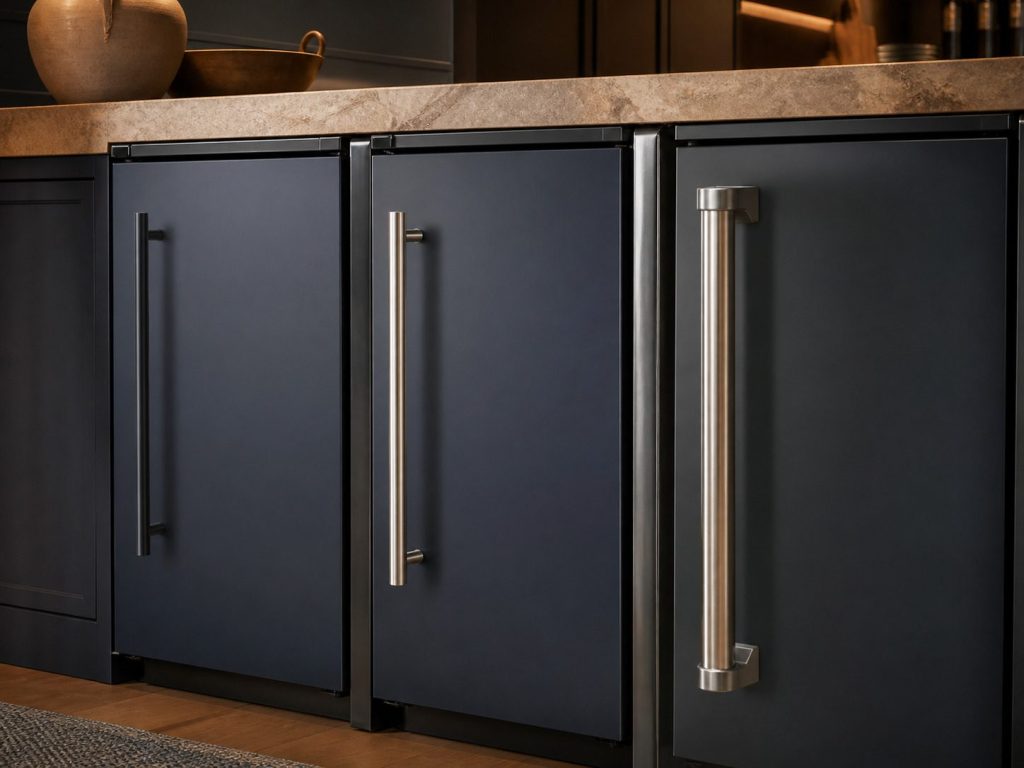
Kenmore, Elite and Pro: What the Three Names Actually Change
Elite and Pro are trim levels, not engineering families. An Elite refrigerator can be LG-built and an Elite range Frigidaire-built, and the badge tells you nothing about the parts.
Read more
Tell us the model number and what it is doing.
This article is based on:
- Official manufacturer documentation
- Internal repair procedures
- Technician repair history
- Company quality standards