Troubleshooting
Reading a Kenmore Error Code Against the Right Manufacturer’s Table
There is no Kenmore error-code table, because Kenmore did not build the machine that is displaying the code. Every code belongs to the manufacturer named by the first three digits of the model number: a 110 washer is speaking Whirlpool, a 796 washer is speaking LG, and a 790 range is speaking Frigidaire. The three schemes are structurally different — Whirlpool uses F and E number pairs, LG uses two-letter codes, Frigidaire uses F numbers on cooking appliances and i numbers on dishwashers — but they overlap enough that a code read against the wrong table produces a confident answer about the wrong component. Some of these machines publish no table at all, and a page offering one long combined list of Kenmore codes is a sign that somebody has merged tables that were never meant to be merged.
The full guide
Kenmore error codes belong to somebody else, and that is the whole trick
The most useful thing anybody can tell an owner of one of these appliances is this: the code on your display was written by the company that built the machine, and that company is named by the three digits in front of the period on the rating plate.
That is not a technicality. The three schemes are different enough that reading one against another gives you an answer — just not the right one.
What each scheme looks like
Whirlpool-built machines — 110 laundry, 665 dishwashers, 106 refrigeration. Codes come as an F number paired with an E number, F9 E1 and the like, where the first names the function reporting and the second names what it reported. Alongside those sit short words and abbreviations that appear directly in the display: a suds warning, a long-drain warning, a lid message, a control-lock message. On many dishwashers there is no numeric display at all, so the Clean light flashes the two numbers as two runs of flashes with a pause between.
LG-built machines — 796 laundry, 795 refrigeration. Codes come as two characters, usually two letters, and LG gives each one a plain-language name in its own documentation: OE is a water outlet error, IE an inlet error, UE an unbalance error, LE a motor locked error. Some machines with numeric displays show a number for the same condition instead, which is why the same problem appears under two names.
Frigidaire-built machines — 790 ranges and wall ovens, 587 dishwashers, 253 refrigeration. Cooking appliances use F numbers, and they are grouped: the F9 family is the door lock, for example. Dishwashers use a separate i series — i20 for a drain problem, i40 for another condition entirely. Refrigeration mostly uses named indicators rather than codes.
Where the collision happens
Look at those three lists and the problem is obvious. F plus a number appears in the Whirlpool scheme and in the Frigidaire scheme, and they mean unrelated things. Two-letter combinations appear in the LG scheme and among Whirlpool's short-word messages.
So somebody with a 790 range showing an F number searches for a Kenmore code list, lands on a page built mostly out of Whirlpool laundry codes, and is told confidently to check a component their range does not contain.
The fix is boring and it works: look up the first three digits first, then read only that manufacturer's table. Every code page on this site says on the page which company wrote the code and which prefixes it applies to, for exactly this reason.
The machines that publish nothing
This part gets left out of code lists because it is not interesting, and it saves the most time.
A Roper-built 911 range has nothing to look up. Its documentation is symptom-based, and the codes attributed to it in circulation trace back to parts retailers rather than to the manufacturer. If you own one, the display is not withholding anything from you.
Range hoods do not publish codes, from any manufacturer on this list. Neither do cooktops as a category.
Some indicator behavior is not an error at all. A power-failure light, a control lock, a tub-clean reminder and a demo mode all look alarming and all mean the appliance is working exactly as designed. This site files those separately from problems, because treating one as the other is how a working machine gets a service call.
The warning sign
If you find a page offering a long list of "Kenmore error codes" without naming a manufacturer against any of them, close it. Somebody has stacked three code tables on top of each other, and about two thirds of that list does not apply to your appliance. Which two thirds depends on three digits they never asked you for.
If it turns out to be a repair
What this leads to, and what it costs
Every job on this site is priced the same way: an on-site diagnostic first, the figure agreed in writing before anybody starts.
-
Whirlpool-built Kenmore dishwasher error code F9 E1
Whirlpool wrote this code, not Kenmore. On a dishwasher wearing this badge, F9 E1 means: Whirlpool's own label is Long Drain: the dishwasher is not draining properly. Which model prefixes can raise it, and what to do next.
What this one means -
Frigidaire-built Kenmore dishwasher error code i20
Frigidaire wrote this code, not Kenmore. On a dishwasher wearing this badge, i20 means: Frigidaire's own wording: i20 indicates the dishwasher is not draining properly — the unit did not drain in the expected time. Which model prefixes can raise it, and
What this one means -
LG-built Kenmore washer error code OE
LG wrote this code, not Kenmore. On a washer wearing this badge, OE means: LG's own label is WATER OUTLET ERROR — the machine cannot drain the water out. Which model prefixes can raise it, and what to do next.
What this one means
Questions people ask about this
Why do some sites publish a hundred Kenmore codes?
Because they have merged several manufacturers' tables into one list without saying so. It looks comprehensive and it is the reason people diagnose the wrong component. If a list does not tell you which manufacturer each code belongs to, it cannot be used safely.
My appliance shows no code at all. Is it broken?
Not necessarily. Plenty of these machines were built without a display capable of showing one, and some categories have no published code scheme in the first place. A machine that simply stops is telling you what it can.
Can the same code mean two things?
Yes, and it is one of the traps. LG's dE means a door problem on a front-loader and a lid problem on a top-loader. Two characters, two machines, two checks.
Do I need the code before I call?
It helps a great deal, but the model number helps more. With the number we know which language the machine speaks; with the code as well, we usually know what to bring.
Troubleshooting
More guides like this one
-
F Numbers on a Whirlpool-Built Kenmore Washer, and How to Read Them
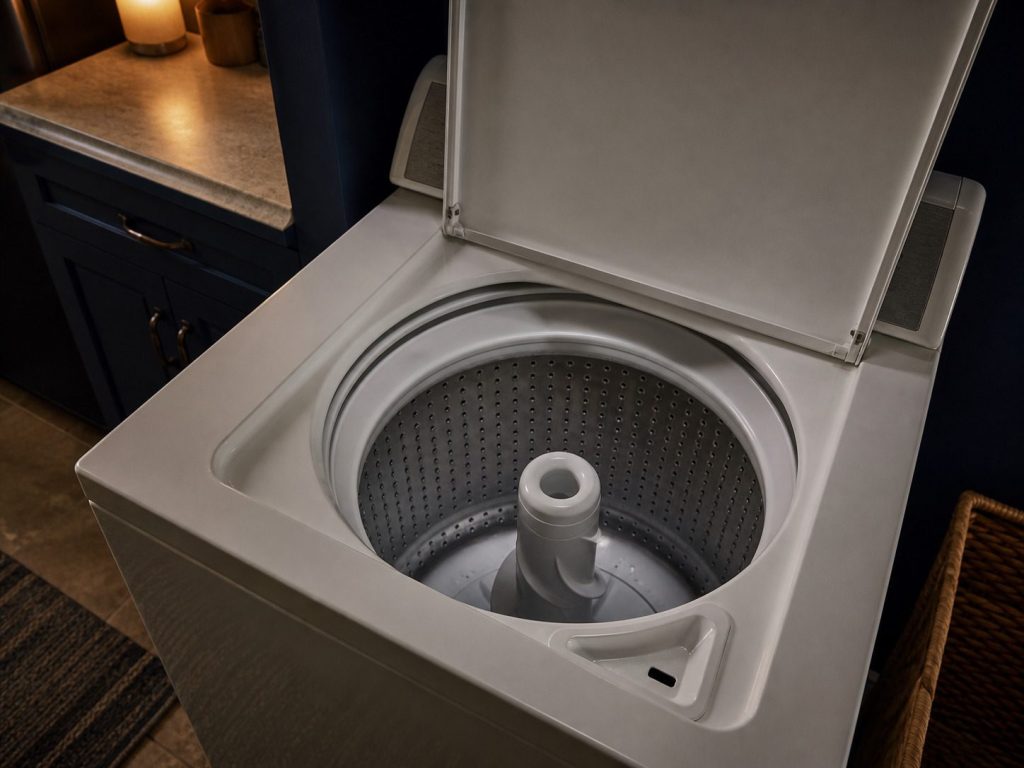
A 110 washer is a Whirlpool. Its codes come in two halves — the function that reported, and what it reported — and a few older machines print them as one number instead.
Read more -
How to Read Kenmore Model Numbers, and What Changes Once You Have
Kenmore builds nothing. The three digits in front of the period on the rating plate name the company that did, and almost everything else about the repair follows from them.
Read more -
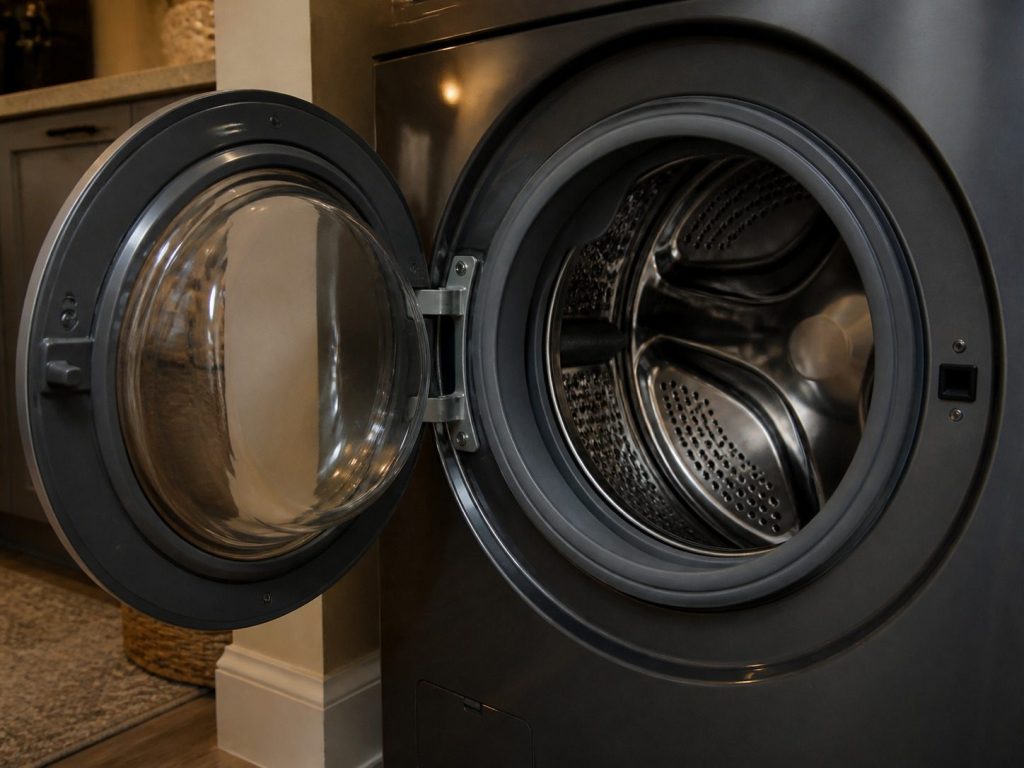
The Two-Letter Codes on an LG-Built Kenmore Washer
A 796 washer is an LG. Its codes are two characters, each with a plain-language name in LG's own documentation, and one of them has a different meaning on a top-loader.
Read more
Tell us the model number and what it is doing.
This article is based on:
- Official manufacturer documentation
- Internal repair procedures
- Technician repair history
- Company quality standards