Troubleshooting
A Blinking Clean Light Is a Kenmore Dishwasher Trying to Talk
A blinking Clean light on a Kenmore dishwasher is the machine reporting an error code on a display it does not have. Whirlpool's own wording is that a flashing clean light usually means the machine is trying to report a code — the light is a messenger, not a problem in itself. Count it in two parts: the first run of flashes is the F number, naming the function that reported, then a short pause, then a second run of flashes which is the E number, naming what that function reported, then a noticeably longer pause before the whole thing repeats. Watch it through twice before deciding on the counts. The pair is what you look up, and it belongs to whichever manufacturer built the machine.
The full guide
Kenmore dishwasher clean light blinking: how to read it
Most of these dishwashers were built without a numeric display. That did not stop the engineers wanting to report codes, so they used the only output the machine has: an indicator light, blinked in a pattern.
The pattern has a grammar and once you know it the light stops being alarming.
First run of flashes. Count them. That is the F number — the function that reported something.
A short pause. The code is not finished.
Second run of flashes. Count them. That is the E number — what the function reported.
A long pause, noticeably longer than the first. Now the whole thing repeats.
So four flashes, pause, one flash, long pause, is F4 E1 and not "five flashes". Watch it through at least twice, because the temptation is to start counting halfway through a run and end up looking up a code that does not exist.
What the two halves actually mean
The F half names a function of the machine: filling, draining, heating, the control panel, the door, temperature sensing. The E half names what happened to it: took too long, out of range, no response, two sensors disagreeing.
Read that way, the codes stop being arbitrary. A drain-function code paired with a took-too-long code is exactly what Whirlpool's own label for it says out loud: a long drain. Which is why, having counted it, the next thing to do is not to buy a part but to open the filter.
The light is a messenger
Worth saying plainly, because it is the thing people get wrong. Whirlpool's own wording is that a flashing clean light usually means the machine is trying to report a code. Nothing has failed in the light and nothing has failed in the display.
Which also means clearing it achieves nothing on its own. Cut the power and the light stops; if the condition is still present, the next cycle brings it straight back. That is not the reset failing — it is the machine confirming that the code describes something real.
Which table to read it against
The same warning as everywhere else on this site. The dishwashers wearing this badge were built by three different companies and their code schemes do not overlap.
A 665 is Whirlpool-built and uses the F-and-E scheme described above, flashed on the Clean light.
A 587 is Frigidaire-built and uses a separate i-number series shown as characters where there is a display.
A 630 is Bosch-built, and it is the prefix most often looked up against entirely the wrong company because it is missing from most of the decode lists in circulation.
Count the flashes, then read the three digits on the plate at the edge of the tub, then look the pair up under that manufacturer's name. In that order, the answer is reliable. In any other order it is a coincidence.
Before you call
Have three things: the count, in the form of two numbers; the model number, all of it; and whether the cycle finished or stopped. Those three between them usually decide whether the visit needs a part on the van, and that decides whether it is one visit or two.
If it turns out to be a repair
What this leads to, and what it costs
Every job on this site is priced the same way: an on-site diagnostic first, the figure agreed in writing before anybody starts.
-
Whirlpool-built Kenmore dishwasher signal Clean light flashing
Clean light flashing is an indicator rather than an error. Whirlpool publishes it for the dishwasher this badge covers, and it means: Whirlpool's own wording: a flashing clean light usually means the machine is trying to report a code. It is a
What the machine is telling you -
Whirlpool-built Kenmore dishwasher error code F9 E1
Whirlpool wrote this code, not Kenmore. On a dishwasher wearing this badge, F9 E1 means: Whirlpool's own label is Long Drain: the dishwasher is not draining properly. Which model prefixes can raise it, and what to do next.
What this one means -
Dishwasher will not start
Two very different situations look identical from the kitchen: a machine with no power, and a machine that has power and will not confirm its door is shut. The second is far more common and far cheaper, and there are two settings that produce it with nothing broken at all.
- The door latch fails more often than the board
- Control lock and delay start account for a real share
- Two settings, both free to rule out
Questions people ask about this
The light blinks but the dishes are clean and it finished.
Then the machine completed the cycle and reported something along the way. It is still worth counting, because a code reported once is often the beginning of a story rather than the end.
Can I stop the blinking?
Cutting power clears the display. If the condition that produced the code is still there it will return, which is how you tell a passing event from a standing one.
My machine flashes a different light.
Several of these use the Control, Sanitize or cycle lights the same way. The counting method is the same; the light chosen depends on the model.
How do I know which manufacturer's list to read?
The three digits before the period on the plate at the edge of the tub. 665 is Whirlpool, 587 is Frigidaire, 630 is Bosch, and their tables are not interchangeable.
Troubleshooting
More guides like this one
-
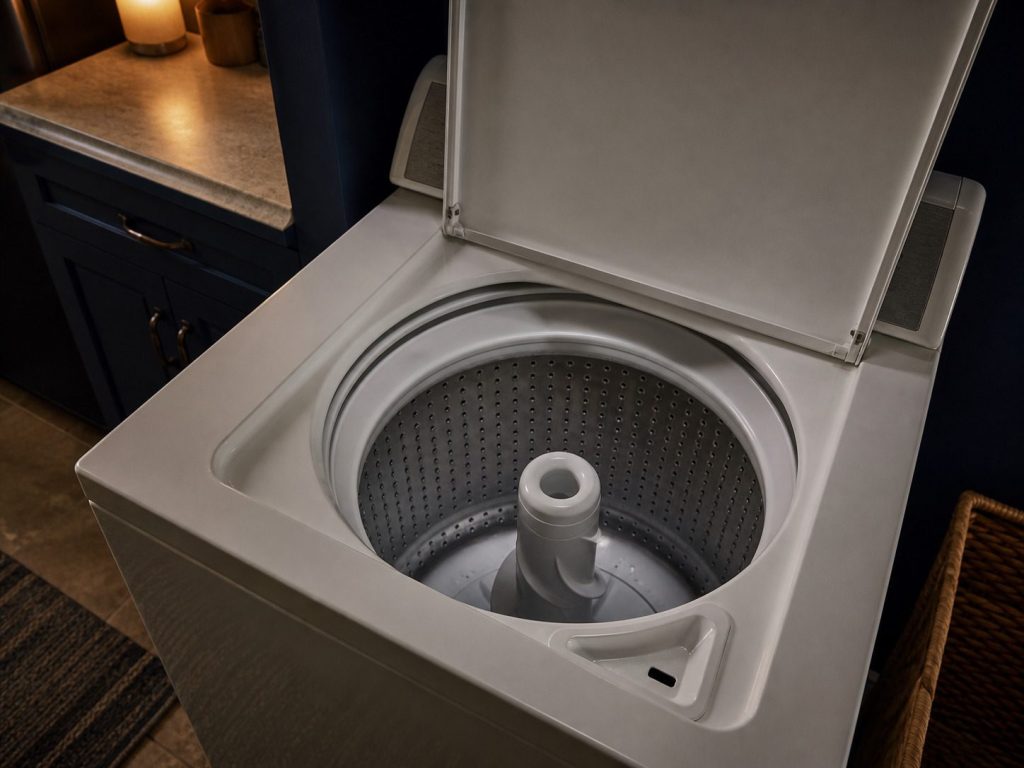
F Numbers on a Whirlpool-Built Kenmore Washer, and How to Read Them
A 110 washer is a Whirlpool. Its codes come in two halves — the function that reported, and what it reported — and a few older machines print them as one number instead.
Read more -
How to Read Kenmore Model Numbers, and What Changes Once You Have
Kenmore builds nothing. The three digits in front of the period on the rating plate name the company that did, and almost everything else about the repair follows from them.
Read more -
The Two-Letter Codes on an LG-Built Kenmore Washer
A 796 washer is an LG. Its codes are two characters, each with a plain-language name in LG's own documentation, and one of them has a different meaning on a top-loader.
Read more
Tell us the model number and what it is doing.
This article is based on:
- Official manufacturer documentation
- Internal repair procedures
- Technician repair history
- Company quality standards