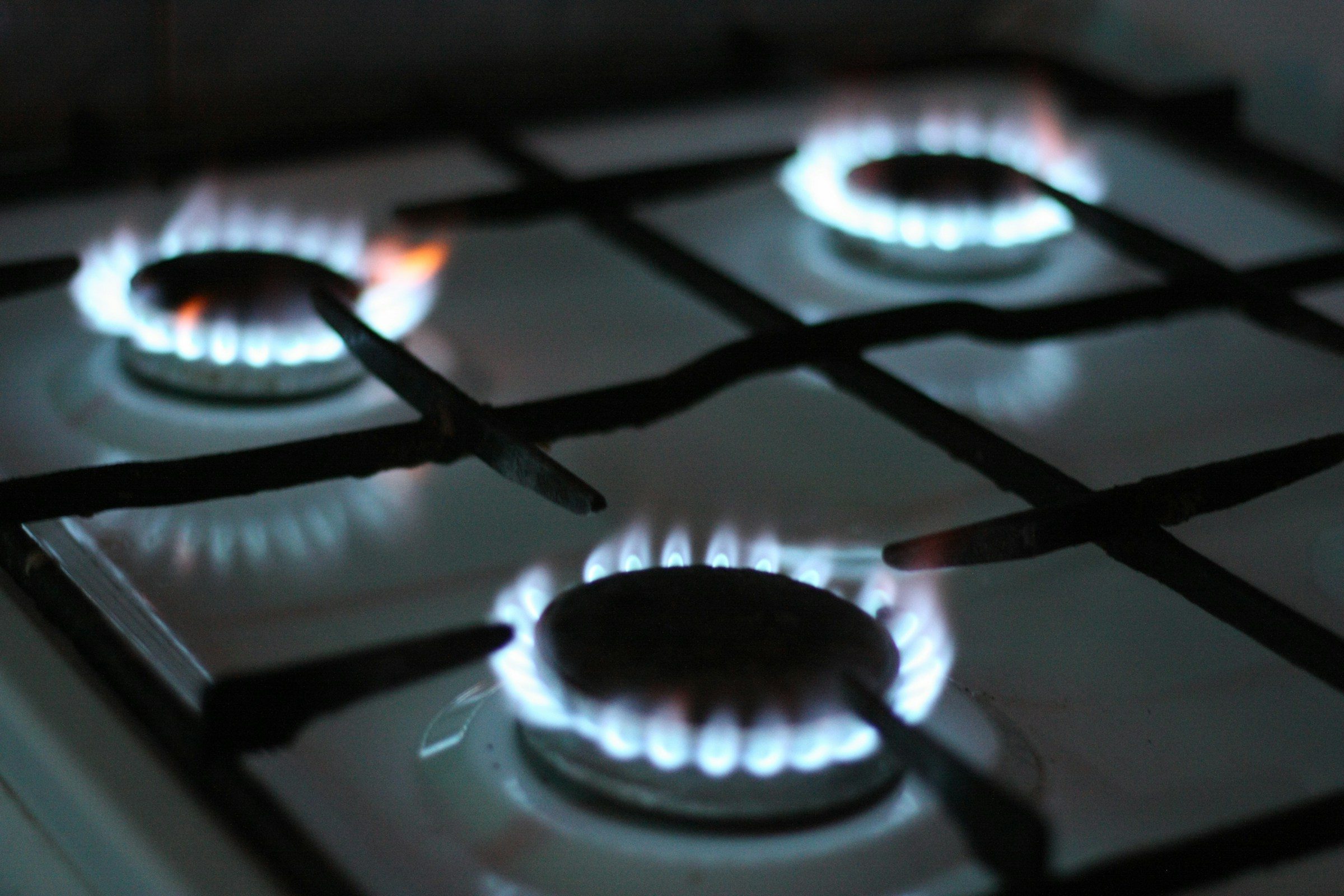
Safety & Risks
A Kenmore Gas Burner That Clicks and Will Not Light
If the igniter keeps clicking, the spark system has power and is firing, which removes the electrical half of the problem straight away. Work through four things in order. Reseat the burner cap squarely in its recess, because a cap a millimeter out of position puts the flame where the spark is not. Dry the burner head thoroughly if anything has boiled over, since moisture around the ceramic electrode is by far the commonest cause and clears itself once dry. Clear the ports around the rim with a pin or a paperclip, never a toothpick that can break off inside. And check that the electrode itself is clean and not cracked. Stop and leave the house if you smell gas with all the controls off.
The full guide
Kenmore stove igniter keeps clicking: what the clicking already tells you
Start with the good news, because it removes half the possible repairs. Clicking means the spark system has power and is firing. The module is alive, the switch is closing, the wiring is intact. What is not happening is combustion, and that is a much shorter list.
All three causes live under the cap.
Moisture, which is most of them
Anything that boils over runs into the burner head and sits around the ceramic electrode. A wet electrode sparks to the nearest wet surface instead of across the gap where the gas is, and the burner clicks indefinitely.
It is self-correcting once dry, which is why the burner that would not light on Sunday evening works fine on Monday morning — and why so many people conclude it is intermittent and mysterious.
Take the cap off, dry everything with a cloth, and give it ten minutes.
The cap that is a millimeter out
The burner cap sits in a recess, and on most of these ranges it has an orientation. Put back in a hurry after a clean, it can sit proud on one side or rotated slightly, and the flame ring is then not where the electrode is aimed.
Lift it and set it down again properly. It is the second commonest cause and it takes five seconds.
Blocked ports
The ring of small holes around the rim of the burner head delivers the gas. Boiled-over food bakes into them, and a burner with half its ports blocked lights slowly, unevenly, or on one side only.
A pin or a straightened paperclip clears them. Not a toothpick — the tip snaps off inside the port and then it is a job rather than a chore.
The one that means stop
If you smell gas with every control in the off position, this page is finished. Do not click at anything, do not light a match, do not switch anything on or off. Leave the house with the door open behind you and call the gas company from outside.
That is not a repair question and it is not ours to answer first.
The cooktop that looks completely dead
Worth including here because it arrives with the same phone call and it is not a failure at all.
On a Frigidaire-built range — a 790 — a dash in the display means the cooktop is locked. The manufacturer's own instruction is to press OFF and hold it for six seconds. The appliance is working perfectly and is doing precisely what somebody, quite possibly a small person, told it to do.
Several of these ranges have similar locks with similar releases. Checking that before assuming a control board has saved a good number of visits.
When it is genuinely ours
After the cap, the drying, the ports and the electrode, what is left is the spark module, the wiring to it, the switch in that burner's control, or the gas supply to that burner specifically.
Those are measurements rather than checks, and they involve the gas train. That is where the homeowner half of this job ends.
If it turns out to be a repair
What this leads to, and what it costs
Every job on this site is priced the same way: an on-site diagnostic first, the figure agreed in writing before anybody starts.
-
One cooktop burner not working
Good news, usually. A single dead zone points at that zone rather than at anything the whole cooktop shares, and on all three technologies the parts involved are accessible and modest.
- One zone dead is rarely a shared part
- On gas it is usually seating or a port
- Cracked glass is a stop, not a repair
-
Frigidaire-built Kenmore range signal Dash
Dash is an indicator rather than an error. Frigidaire publishes it for the range this badge covers, and it means: A dash in the display means the cooktop is locked. Frigidaire's own instruction is to press OFF and hold for six seconds.
What the machine is telling you -
Surface igniter replacement
A gas burner that clicks and clicks and will not light. Clicking means the spark system is alive and trying, which rules out a great deal — and it is very often the burner cap seating or a blocked port rather than the igniter at all.
- Cap seating and ports checked first, for free
- Igniter tested rather than assumed
- The gas valve is rarely the answer
Questions people ask about this
It clicks on every burner, not just one.
That usually means moisture or a switch rather than a burner. A single burner points at that burner; all of them at once points at something shared.
Can I use a match?
For a burner that is otherwise healthy, yes, and many manuals describe it. Do not use one on a burner you have been clicking at for a while — clear the air first, because unburnt gas has been going somewhere.
The clicking carries on after the burner lights.
Same causes, and it is not harmful in the short term. It usually means the spark module is not seeing the flame it expects, most often because of moisture or a cap out of position.
My cooktop is completely dead and shows a dash.
On a Frigidaire-built range a dash in the display means the cooktop is locked. The manufacturer's own instruction is to press OFF and hold for six seconds. Nothing has failed.
Safety & Risks
More guides like this one
-
Why a Self-Clean Cycle Is the Riskiest Thing an Old Oven Does
The cycle runs the cavity far hotter than cooking ever does, for hours, and that is where an aging lock, a marginal cut-off or a tired control gives up.
Read more -
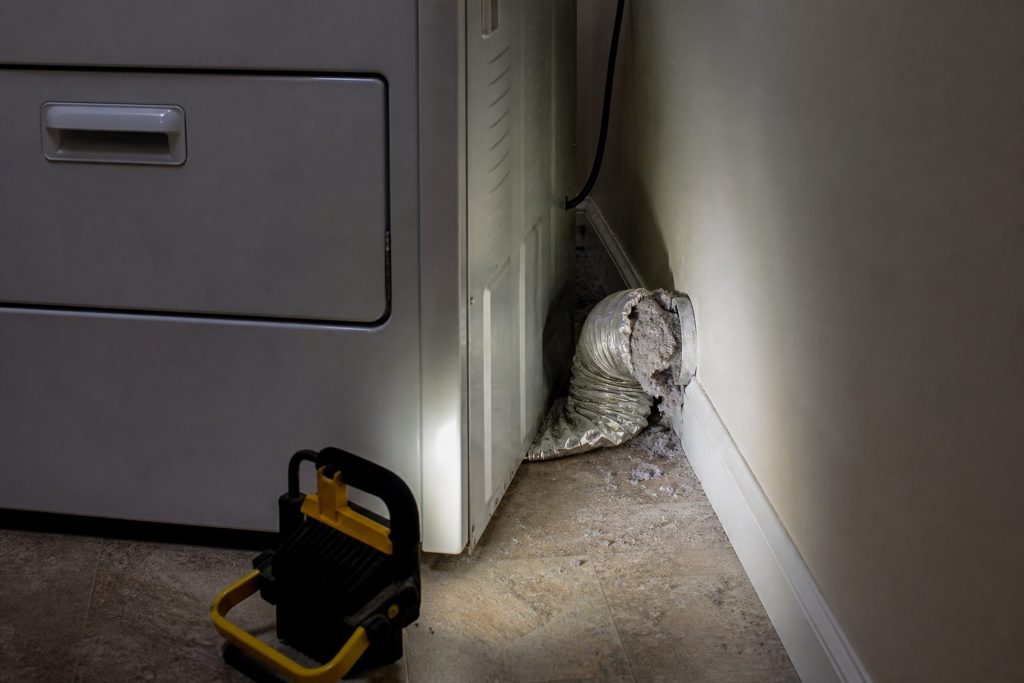
When a Kenmore Dryer Needs Two Cycles, It Is Usually the Duct
Three manufacturers built these dryers and all three publish a restricted-airflow warning, because in this climate the duct fills faster than any manual assumes.
Read more
Tell us the model number and what it is doing.
This article is based on:
- Official manufacturer documentation
- Internal repair procedures
- Technician repair history
- Company quality standards