Common Problems
Standing Water in a Kenmore Dishwasher: the Path It Could Not Take
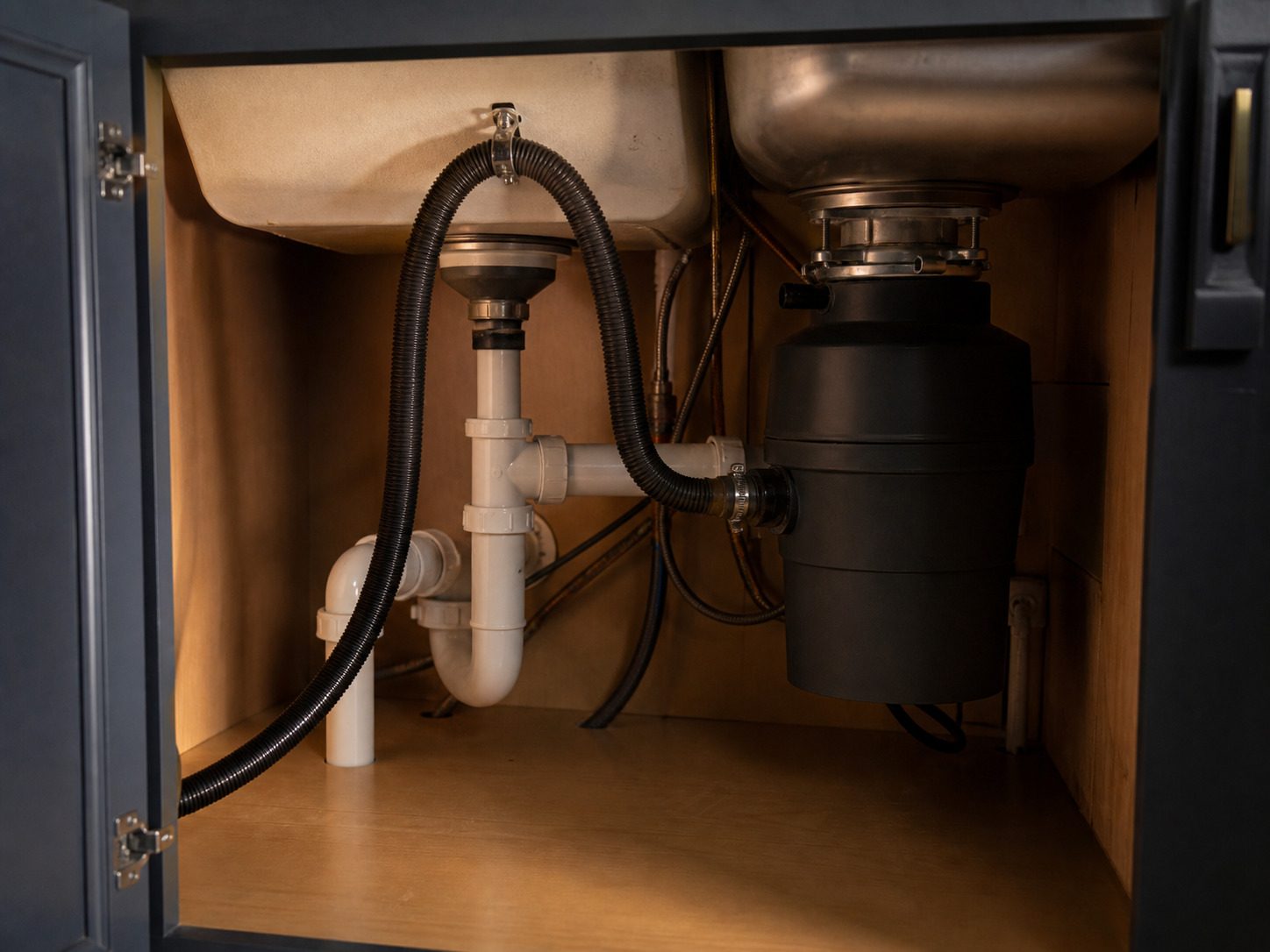
Work the drain path in order, because each stage is easier to check than the one after it. Take the filter out of the floor of the tub and clean it, since a filter packed with residue is the commonest cause by a wide margin. Look at the sump underneath for glass, a label from a jar, or a bone. Check that the drain hose behind the appliance is not kinked and that it rises into a loop before it drops, which is what stops sink water siphoning back. If there is an air gap on the counter beside the tap, take its cover off and clear it. And run the kitchen disposer, because a new disposer with its knockout plug still in place is a very common cause of a dishwasher that has never drained since the day the kitchen was fitted.
The full guide
Kenmore dishwasher not draining water: one path, five places it stops
Three different companies built the dishwashers wearing this badge — Whirlpool for the 665, Frigidaire for the 587, Bosch for the 630 — and they report this condition in three different ways. Whirlpool's machines pair an F number with an E number and label it a long drain. Frigidaire's use an i number. On machines with no numeric display at all, the Clean light flashes the code instead.
Underneath the notation, the plumbing is the same on all of them, and so is the order of work.
The filter, and why it is first
The filter is a cylinder standing in the floor of the tub with a flat screen underneath it. It is designed to be lifted out by hand — no tool — and washed in the sink. Every one of the three manufacturers describes it in the manual as an owner's job.
A great many of these have never been out. In a decade the mesh seals with a film of grease and starch, water stops passing through it, and the machine cannot move enough water to drain in the time its control expects. That is the commonest cause of this complaint by a wide margin, and you have just fixed it yourself.
The sump, which you can only see once the filter is gone
Underneath sits the sump and the pump inlet. This is where the things that are too big for the filter end up: a shard of glass from a broken tumbler, the label off a jar, a fruit sticker, a small bone.
Any of them stops the pump dead. A pump straining against an obstruction sounds exactly like a pump failing, which is why quite a few perfectly good pumps get replaced.
The hose, and the loop that stops siphoning
Behind the appliance, the drain hose has to rise to a high loop before it drops to its connection under the sink. That loop is not decoration — it is what prevents sink water running back down into the dishwasher.
Two things go wrong here. The hose gets kinked when the appliance is pushed back into its opening, and the loop gets lost when somebody reroutes the plumbing. The second one shows up as dirty water appearing in a clean machine, which reads as a drain problem and is really a backflow one.
The two that are not the dishwasher at all
The air gap. The small chrome cylinder on the counter beside the tap, where kitchens have one. It packs with residue, and when it does the machine cannot push water past it. The cover twists off and the cap lifts out, and the blockage is usually visible immediately.
The disposer. Two versions. A disposer full of waste is a blocked drain, and running it for thirty seconds clears it. And a disposer fitted after the dishwasher arrives from the factory with a knockout plug sealing the dishwasher inlet — if the installer left it in, the dishwasher has never been able to drain and never will until somebody takes it out.
That second one accounts for a real share of dishwashers described as broken from the day the kitchen was finished.
What is left for us
The pump itself, the drain valve on machines that have one, and the control that decides whether the pump runs at all. A pump receiving no signal looks identical from the kitchen to a pump that has failed, and telling those apart is a measurement rather than an opinion.
By the time we get to that, everything cheaper has been ruled out — which is the point of working in this order rather than starting at the expensive end.
If it turns out to be a repair
What this leads to, and what it costs
Every job on this site is priced the same way: an on-site diagnostic first, the figure agreed in writing before anybody starts.
-
Dishwasher not draining
Three manufacturers built the Kenmore dishwashers in South Florida kitchens and all three publish a code for this, in three different alphabets. Which one you are reading decides which table it means something in — and a code read against the wrong maker points confidently at the wrong part.
- A little water in the sump is normal
- The disposer plug is free to check and often the answer
- Three builders, three different codes for one condition
-
Dishwasher drain repair
Standing water after a completed cycle. On a Whirlpool-built 665 this frequently arrives with a code on the display, and read against Whirlpool's own table it points at the drain path rather than at the pump — which is the difference between a filter clean and a part.
- The disposer plug checked before anything is opened
- The code read against the builder's own table
- The pump last, because it is usually not the pump
-
Frigidaire-built Kenmore dishwasher error code i20
Frigidaire wrote this code, not Kenmore. On a dishwasher wearing this badge, i20 means: Frigidaire's own wording: i20 indicates the dishwasher is not draining properly — the unit did not drain in the expected time. Which model prefixes can raise it, and
What this one means

Questions people ask about this
There is always a little water in the bottom. Is that normal?
A small amount in the sump is normal on most machines and keeps the seals wet. An inch across the floor of the tub is not.
Should I add vinegar or a drain product?
No. Neither reaches the blockage, and drain products damage seals and pumps. Everything on this page is mechanical.
It drains but leaves the dishes wet and dirty.
That is a different complaint — wash performance rather than drainage — and it usually comes down to spray-arm jets, water temperature and scale.
The machine is new and has never drained properly.
Then look at the installation before the appliance: the knockout plug in a new disposer, a hose with no high loop, or an air gap that was never connected.
Common Problems
More guides like this one
-
A Kenmore Washer Full of Water: How to Empty It and What to Check
The drum is full, the laundry is soaked, and the machine is not going to help. Here is the order to work in, and where the two machines wearing this badge differ.
Read more -
Water in the Bottom of a Kenmore Refrigerator Is Water It Made Itself
A pool under the crispers is almost never a leak. It is melt water the appliance produced on purpose and could not get rid of, and the blockage is in one place.
Read more -
A Kenmore Refrigerator That Is Not Cooling: Three Machines, Three Answers
The same complaint on a 795, a 106 and a 253 points at different things, because they are an LG, a Whirlpool and a Frigidaire wearing one badge.
Read more
Tell us the model number and what it is doing.
This article is based on:
- Official manufacturer documentation
- Internal repair procedures
- Technician repair history
- Company quality standards