Common Problems
A Kenmore Refrigerator That Is Not Cooling: Three Machines, Three Answers
Before anything else, rule out the two settings that produce a cabinet that looks perfect and does not cool: a demo or showroom mode, and a cooling-off setting. Both are documented by the manufacturers and both are common on floor-model purchases. After that, check the things that apply to every refrigerator: a condenser thick with dust, a door that is not sealing, and a vent inside the cabinet blocked by food. Then the three digits matter. A 795 is LG-built and moves cold with a fan, so a stopped fan presents as a warming cabinet while the compressor runs. A 106 is Whirlpool-built and a 253 is Frigidaire-built, with different defrost arrangements and different indicator behavior. All three share one thing: a compartment above 40 degrees Fahrenheit is a food-safety question before it is a repair question.
The full guide
Kenmore refrigerator not cooling but freezer works: two settings, then the physics
Start with the two things that are not failures at all, because between them they account for a surprising share of the calls on this complaint and both are free to undo.
Demo or showroom mode. Frigidaire-built cabinets show 77 77 for it, and Frigidaire's own description is that it is designed for a display set up in a store, without using the functional components. The lights work, the display works, the panel responds — and nothing gets cold, on purpose.
Cooling turned off. Whirlpool-built cabinets have a setting that does exactly what it says, and the display reads COOLING OFF while it is active.
Both are common on an appliance bought as a floor model, and both are documented by the manufacturer rather than being a trick. If your refrigerator looks entirely healthy and is doing nothing, check these before you check anything else.
Then the three that apply to every refrigerator ever built
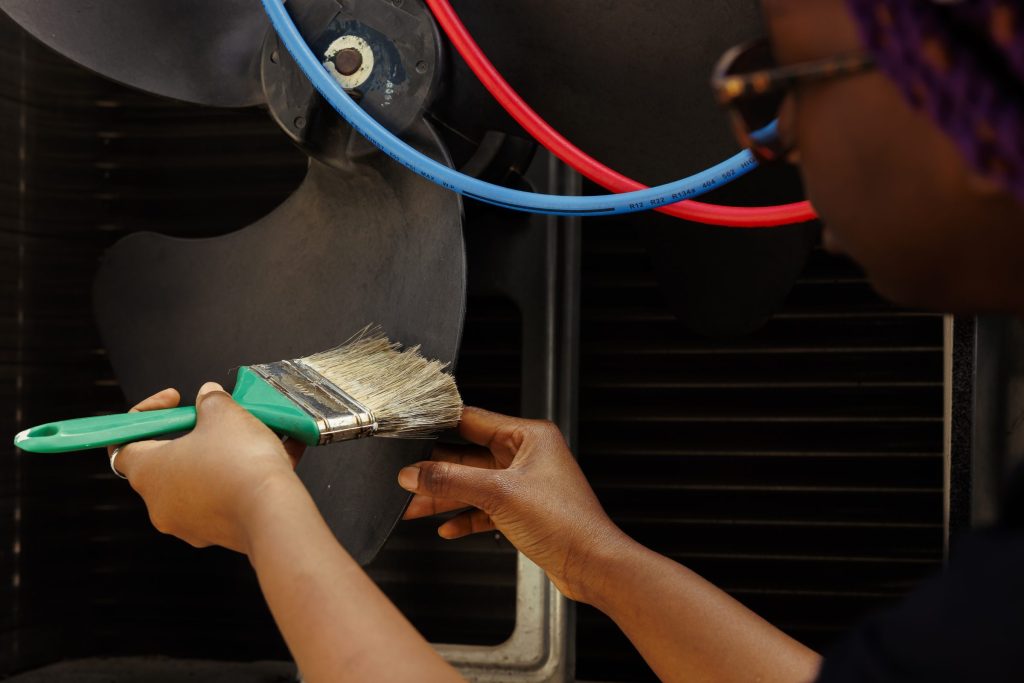
The condenser. It sheds the heat the appliance takes out of your food. Wrapped in dust and pet hair, it cannot, and the whole machine runs hot and achieves less. In this county, with the appliance in a warm kitchen and the air carrying dust all year, it is the commonest cause on this page and the cheapest to remove.
The door seal. Warm humid air leaking in all day makes the machine run continuously and frost the evaporator, which then blocks the airflow, which makes the cabinet warmer, which makes it run more. Close the door on a strip of paper and pull: if it slides out without dragging, the seal is not sealing at that point.
A blocked vent. Cold arrives through vents, usually at the back of the fresh-food compartment. A shopping delivery packed against them turns off the supply to half the cabinet, and the answer is to move the food.
What the three digits change
Now the badge stops helping and the number takes over.
795 — LG-built. Cold is moved by a fan rather than falling where it is needed. So on these cabinets a stopped evaporator fan presents as a fridge that warms up while the compressor runs happily, which is confusing until you know the layout. LG documents a freezer fan condition of its own.
106 — Whirlpool-built. A different arrangement and different indicator behavior, including a power-outage indicator that disables the controls while it is showing. That one looks like a dead panel and is not.
253 — Frigidaire-built. Different again, with a power-failure light of its own that warns the cabinet may have been warm while you were out.
None of that changes what you check first. All of it changes what the second hour of the visit looks like, and which parts are worth having on the van.
The split that saves you money
If the freezer is still freezing and only the fresh-food compartment is warm, say so on the phone. It is the single most useful sentence a customer offers on this complaint.
A freezer that still works proves the compressor, the refrigerant and the sealed system are all doing their job — which removes the most expensive repair on the list before anybody arrives. What is left is airflow, the defrost circuit and the control, and all three are ordinary work.
Food first
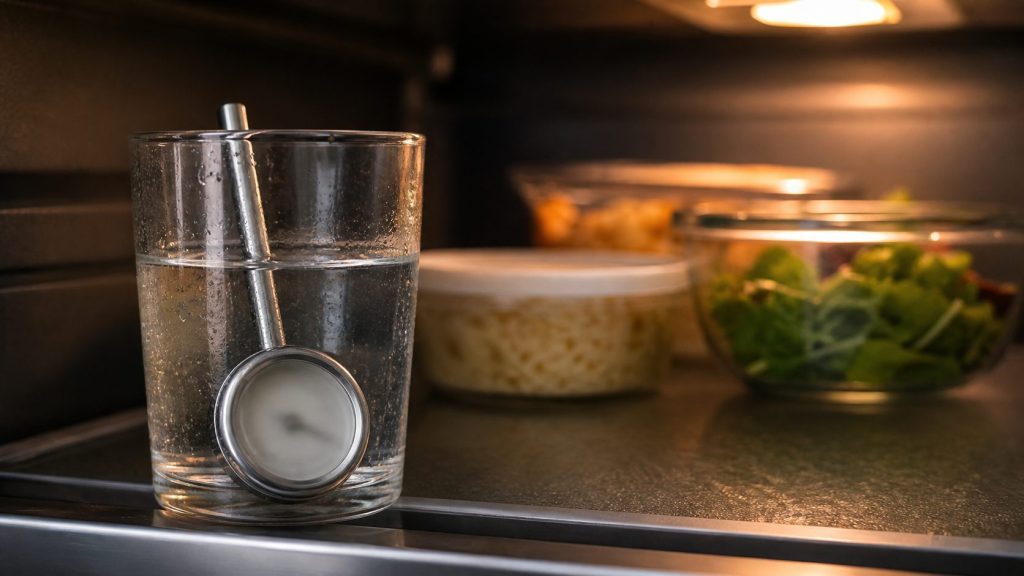
A fresh-food compartment above 40 degrees Fahrenheit is a food-safety question, and it comes before the appliance question. Measure it properly — a glass of water left in the compartment overnight, then a thermometer in the water — rather than judging by how cold the milk feels.
If the cabinet has been warm for hours rather than minutes, deal with the food, then deal with us.
If it turns out to be a repair
What this leads to, and what it costs
Every job on this site is priced the same way: an on-site diagnostic first, the figure agreed in writing before anybody starts.
-
Everything works except the cold Refrigerator not cooling
The call we take more often than any other, and on this badge the one where the number on the sticker changes the answer most. Three different manufacturers built the Kenmore refrigerators in South Florida kitchens, and they arrive at a warm cabinet by different routes and report it in different words.
- Three builders, three first suspects
- Two settings account for a real share of these
- The sealed system is last, not first
-
from $125 Condenser cleaning service
The cheapest work on this site and the work that prevents the most expensive. Dust, pet hair and salt air settle on a condenser here until it can no longer give up its heat, and from then on the compressor buys the same cold with more running time — until something in the circuit stops paying.
- Prevents the repair that costs ten times as much
- Salt air and humidity make this a shorter interval here
- Run time measured before and after
-
from $595 Sealed system repair
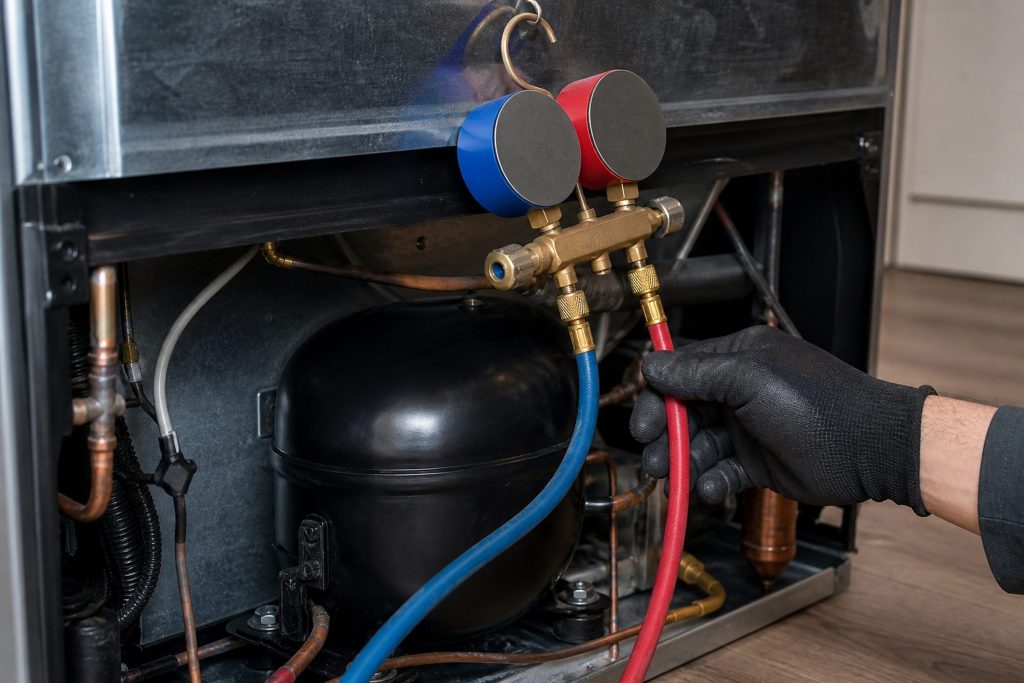
Compressor, condenser, evaporator and the refrigerant between them. It is real, it is the most expensive repair on a refrigerator, and it is quoted far more often than it happens. Everything cheaper is ruled out first, and on a mass-market cabinet we will tell you honestly when the repair no longer makes sense against the price of the appliance.
- Ruled in by measurement, never by elimination alone
- Licensed refrigerant work
- An honest replace-instead conversation where it applies
Questions people ask about this
The freezer is fine and the fridge is warm. What does that tell you?
A great deal. It rules out the whole sealed system, because a compartment that is still freezing proves the refrigerant circuit is working. What is left is airflow, defrost and control — all cheaper.
How long should it take to come back down after a repair?
Hours, not minutes, and the freezer recovers first. Judging a repair by the temperature twenty minutes later is how a working refrigerator gets a second visit.
Is it worth cleaning the condenser myself?
Yes, and here more than most places. A coil packed with dust in a hot kitchen is the commonest cause on this list and the cheapest to remove.
My food is warm. What do I do with it?
Treat the four-hour mark as the line, and judge by temperature rather than by how long the door has been shut. That decision comes before the appliance decision.
Common Problems
More guides like this one
-
A Kenmore Washer Full of Water: How to Empty It and What to Check
The drum is full, the laundry is soaked, and the machine is not going to help. Here is the order to work in, and where the two machines wearing this badge differ.
Read more -
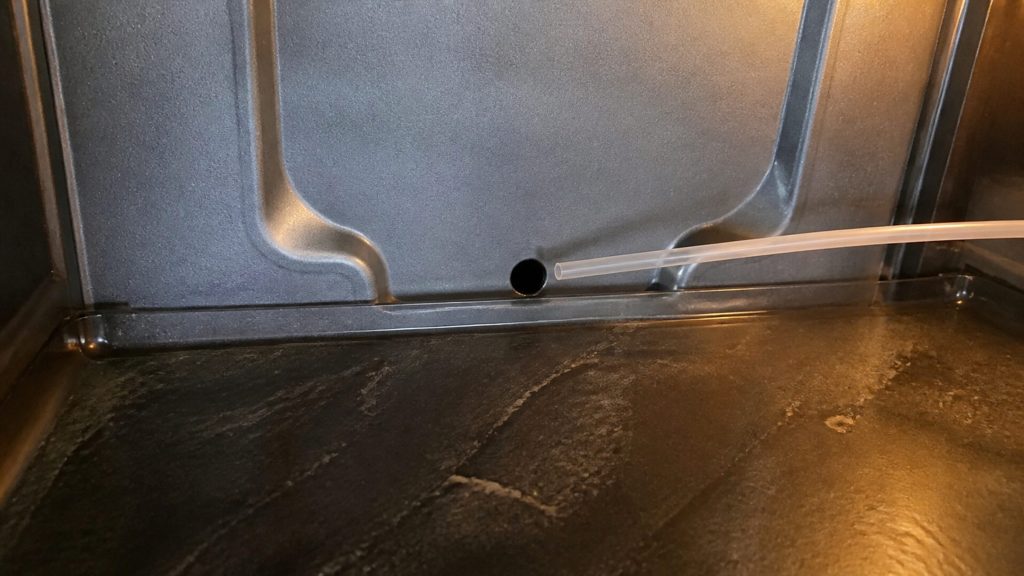
Water in the Bottom of a Kenmore Refrigerator Is Water It Made Itself
A pool under the crispers is almost never a leak. It is melt water the appliance produced on purpose and could not get rid of, and the blockage is in one place.
Read more -
A Kenmore Range Hood That Runs and Does Not Pull
The first question is not what has broken. It is whether the hood was ever sending air outside, because half of them were never meant to.
Read more
Tell us the model number and what it is doing.
This article is based on:
- Official manufacturer documentation
- Internal repair procedures
- Technician repair history
- Company quality standards