Common Problems
A Kenmore Washer Full of Water: How to Empty It and What to Check
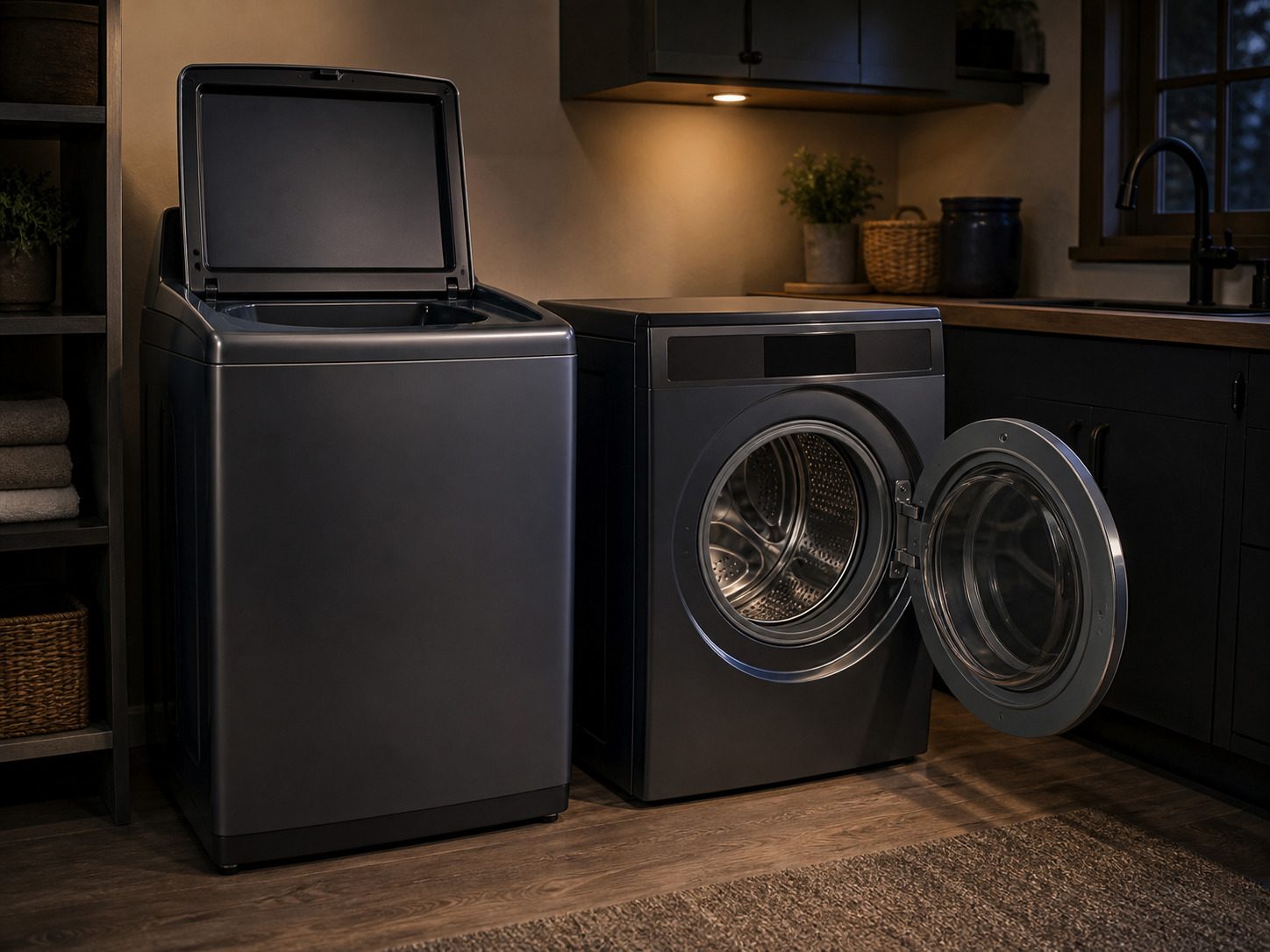
Switch the washer off at the wall before anything else. On an LG-built 796 front-loader, open the small access door at the bottom front of the cabinet — there is a drain pump filter behind it with a short drain hose beside it, put a shallow tray and a towel down and let the water out through that. On a Whirlpool-built 110 top-loader there is usually no such door, so the water comes out with a jug and then a towel, or by lowering the drain hose into a bucket below the level of the drum. Once the machine is empty, work through the cheap causes in order: the drain hose behind the machine, the filter or coin trap, too much detergent, and only then the pump itself.
The full guide
Kenmore washer not draining: getting the water out first
The diagnosis can wait ten minutes. What you have right now is a sealed drum with an inch or more of water in it and a load of laundry that is going to start smelling by tomorrow, so the first job is to empty the machine — and how you do that depends on which of two completely different washers you own.
Read the plate before you do anything. Under the lid on a top-loader, on the frame inside the door on a front-loader. Three digits, then a period.
If it says 796: the little door at the bottom
An LG-built front-loader carries a small hatch low down on the front of the cabinet, and behind that hatch sit a drain pump filter and a short hose. That hose is there for exactly this situation. It is designed to be opened by hand, with no tool.
Put a baking tray and a folded towel under it, pull the hose out, take the cap off, and let it run. It will fill the tray several times over — cap it, empty the tray, carry on. When the flow stops, twist the filter itself out and see what has been living in it.
More than half the time the thing in the filter is the reason the machine stopped, and you have finished.
If it says 110: no door, so a jug
A Whirlpool-built top-loader mostly has no external filter door and no drain hose you can open. Two options.
Bail the drum out with a jug into a bucket, which is slow and works. Or pull the machine forward, take the drain hose off the standpipe, and lower the end of it into a bucket standing on the floor — the drum empties by gravity, provided the bucket is below the water level in the tub. Have a second bucket.
Then the checks, cheapest first
The drain hose. Kinked where the machine has been pushed back against the wall, or pushed so far down the standpipe that the machine siphons. Both are free, both are common, and both are invisible until you look behind the machine.
The filter or coin trap. Covered above on a 796. On a 110 it is internal, and it is our job rather than yours.
Detergent. A high-efficiency machine cannot pump foam. Give it ordinary detergent, or the correct detergent in the quantity somebody used in 1995, and it fills with suds, adds rinse after rinse trying to clear them, and eventually gives up with water in the drum. Both manufacturers publish a warning for this and both mean the same thing: use less.
The house drain. A standpipe that has backed up is not a problem with the washer. It announces itself by overflowing rather than by leaving the drum full.
The pump. Last, deliberately. It is the part everybody assumes and the part that turns out to be at issue least often. A pump that is receiving no signal is a control problem, not a pump problem, and telling those apart is a measurement rather than a guess.
What each machine tells you while this is happening
This is where the two builders diverge again. An LG-built machine generally names the problem — a short code that its own documentation calls a water outlet error. A Whirlpool-built machine may show a long-drain message, or may simply stop mid-cycle and say nothing at all, particularly on an older control.
Neither behavior is worse than the other. But it does mean that "it just stopped and there was no code" is normal on one of these machines and unusual on the other, and knowing which you have is the difference between a useful phone call and a guessing game.
When to stop and call
Stop if the water still will not move once the filter has been emptied and the hose runs straight. Stop if the machine trips the breaker. And stop if there is water on the floor rather than only in the drum — that is a different problem with a different urgency, and it does not wait for the weekend.
If it turns out to be a repair
What this leads to, and what it costs
Every job on this site is priced the same way: an on-site diagnostic first, the figure agreed in writing before anybody starts.
-
Washer will not drain
This is the symptom where the decode earns its keep most visibly. A 110 is a Whirlpool and a 796 is an LG, and on this exact problem one of them will usually name it on the display while the other simply stops. The repair is similar; the phone call is completely different.
- 110 stops quietly, 796 usually says why
- The filter or coin trap comes before the pump
- The pump is blamed far more often than it fails
-
LG-built Kenmore washer error code OE
LG wrote this code, not Kenmore. On a washer wearing this badge, OE means: LG's own label is WATER OUTLET ERROR — the machine cannot drain the water out. Which model prefixes can raise it, and what to do next.
What this one means -
Whirlpool-built Kenmore washer error code Ld
Whirlpool wrote this code, not Kenmore. On a washer wearing this badge, Ld means: The washer is taking too long to drain — Whirlpool's own name for it is a long drain. Which model prefixes can raise it, and what to do
What this one means
Questions people ask about this
Can I run a spin to get the water out?
Most machines will refuse, and forcing it does no good — a machine that cannot drain will not spin, because spinning into standing water is how a drum ends up out of balance against a tub full of water.
How much water is going to come out?
More than the tray will hold, on both machines. Work in stages: fill the tray, close the filter, empty the tray, repeat. The floor is the part people regret.
There is a sock in the filter. Is that the whole problem?
Very often, yes. It is the single most common thing we find, and on a front-loader it is a five-minute job you have just done yourself.
Should I use drain cleaner?
No. It will not reach the part that is blocked, it damages seals, and it makes the machine unpleasant to work on. Nothing on this page needs a chemical.
Common Problems
More guides like this one
-
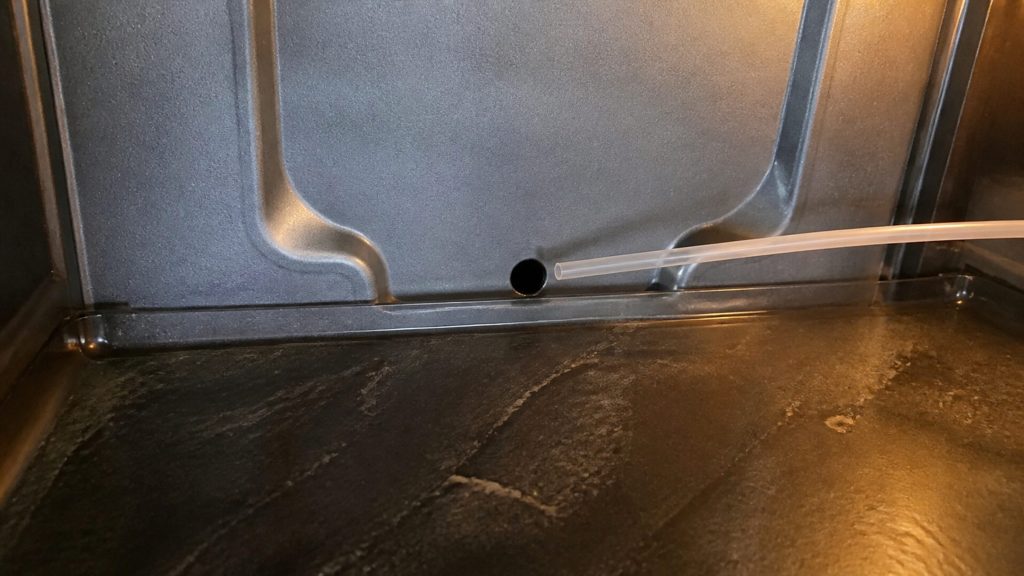
Water in the Bottom of a Kenmore Refrigerator Is Water It Made Itself
A pool under the crispers is almost never a leak. It is melt water the appliance produced on purpose and could not get rid of, and the blockage is in one place.
Read more -
A Kenmore Refrigerator That Is Not Cooling: Three Machines, Three Answers
The same complaint on a 795, a 106 and a 253 points at different things, because they are an LG, a Whirlpool and a Frigidaire wearing one badge.
Read more -
A Kenmore Range Hood That Runs and Does Not Pull
The first question is not what has broken. It is whether the hood was ever sending air outside, because half of them were never meant to.
Read more
Tell us the model number and what it is doing.
This article is based on:
- Official manufacturer documentation
- Internal repair procedures
- Technician repair history
- Company quality standards