Common Problems
Water in the Bottom of a Kenmore Refrigerator Is Water It Made Itself
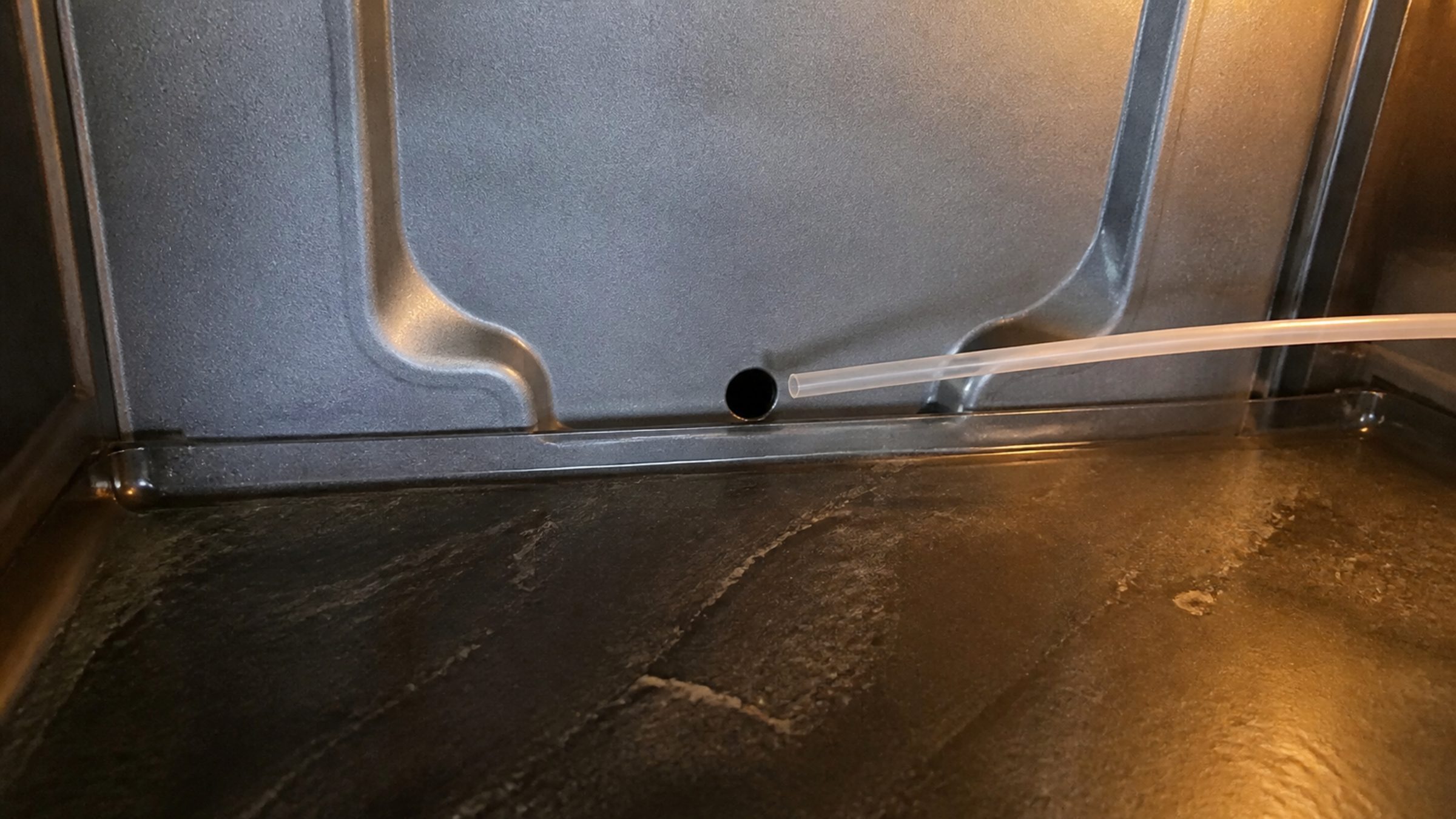
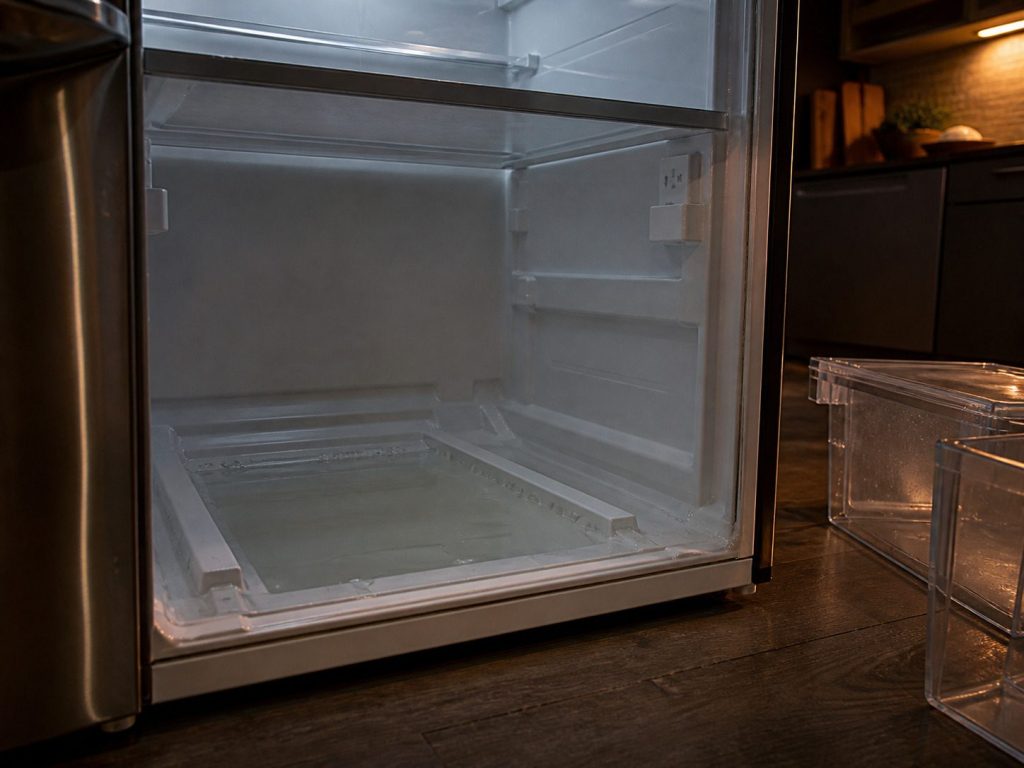
Water in the bottom of the fresh-food compartment or under the crisper drawers is melt water from the defrost cycle that could not reach the drain pan. Every one of these refrigerators frosts its evaporator and then melts the frost off on a schedule; that water is supposed to run down a channel, through a small drain hole at the back of the freezer floor, along a tube and into a shallow pan over the compressor where the heat evaporates it. The narrow point is the drain hole itself, and when it plugs with debris or freezes closed the water backs up and appears inside the cabinet instead. Clearing it is a homeowner job on most models. Water on the floor outside the appliance is a different problem with a different urgency.
The full guide
Kenmore refrigerator leaking water inside: it is melt water, not a leak
The word leak sends people looking for a burst pipe, and there usually is not one. Every refrigerator on this site makes water on purpose, several times a day, and has a small plumbing system of its own for getting rid of it.
Here is the path. The evaporator behind the back wall of the freezer collects frost as it works. On a schedule, a small heater melts that frost off. The melt runs down a molded channel into a drain hole at the lowest point of the freezer floor, through a tube down the back of the cabinet, and into a shallow pan sitting over the compressor, where the heat from the compressor evaporates it.
Four components, one of which is a hole about the width of a pencil. That hole is where it goes wrong.
Why it blocks here in particular
Two reasons, and this climate supplies both.
Humid air brings more water into the cabinet. Every door opening in a Miami kitchen admits air carrying far more moisture than the same door opening would in a dry climate, so there is more frost to melt and more water to drain.
Debris finds the hole. Crumbs, a peppercorn, a piece of packaging. It sits in the opening, catches the next melt, and freezes into a plug that grows.
Once it is plugged, the melt has nowhere to go but sideways — into the channel, over the lip, down the back wall and into the bottom of the fresh-food compartment, where it collects under the crisper drawers and eventually on the floor.
Clearing it
The step list above covers it, and the one caution worth repeating is temperature. Warm water, not boiling. These channels are plastic, they are cold, and boiling water into cold plastic is how a cheap job becomes an expensive one.
Work patiently. A plug that has been forming for weeks does not go in one pass, and forcing anything solid through the hole risks pushing the debris further down the tube where it is genuinely difficult to reach.
When it comes back
This is the part worth reading twice, because most people clear the drain, congratulate themselves and then find the puddle again in the spring.
A drain that blocks once is debris. Clear it and forget it.
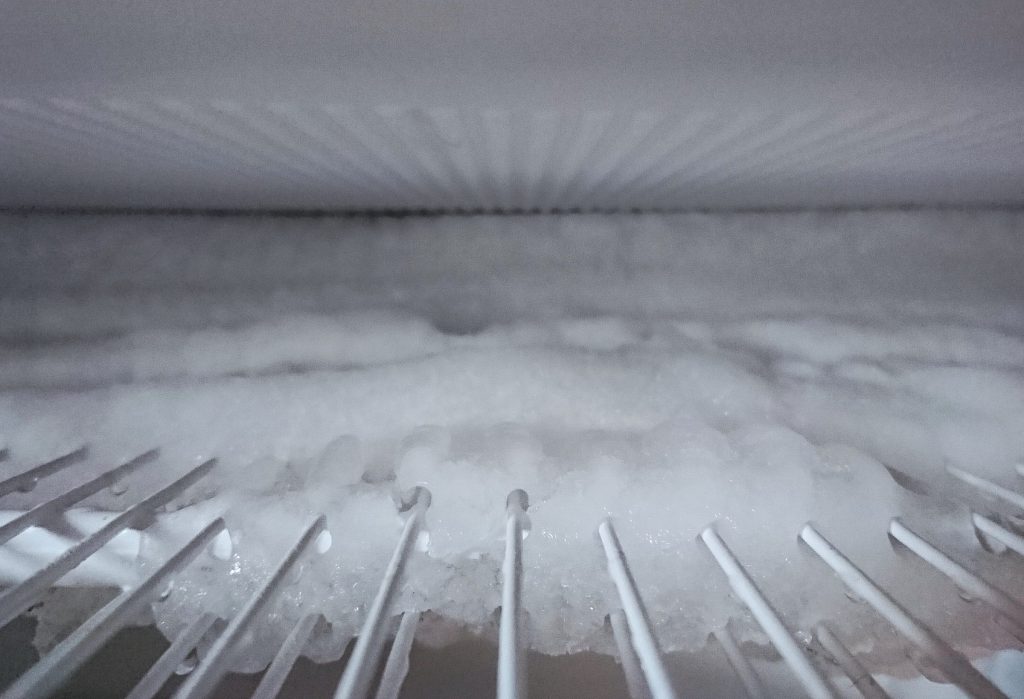
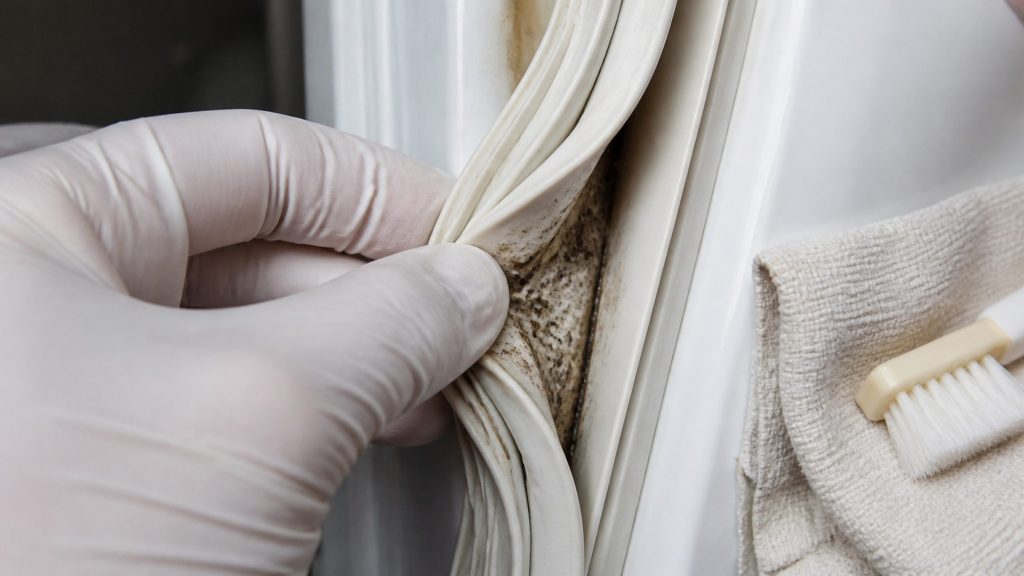
A drain that blocks twice in a season is a symptom. Something upstream is making more melt water than the path was designed for, and there are two usual candidates. A door seal that has hardened lets warm humid air in continuously, so the evaporator frosts far more than it should. A defrost circuit that is not completing leaves ice standing where it should have melted, which also shows as frost on the back wall and a compartment that will not hold temperature.
Both of those are repairs, and both are cheaper than the third possibility, which is that ice has been sitting in the cabinet long enough to reach something it should not.
The one that is not this at all
Water on the floor outside the appliance, with the inside of the cabinet dry, is a different problem: the supply line to the ice maker or the dispenser, the valve at the back, or the pan itself.
That one does not wait for a convenient afternoon, because a supply line under pressure behind a heavy appliance can put a great deal of water into a kitchen while nobody is home. Turn the supply off at the shut-off valve and call.
If it turns out to be a repair
What this leads to, and what it costs
Every job on this site is priced the same way: an on-site diagnostic first, the figure agreed in writing before anybody starts.
-
Water in the crisper, or on the floor Refrigerator leaking water
Where the water lands is rarely where it comes from. There are only four realistic sources on these cabinets, and telling them apart is quick once you know where to look — which is why this is one of the symptoms most worth describing carefully on the phone.
- Water inside and water outside are different problems
- A blocked defrost drain is the commonest cause
- In this climate condensation is a real answer
-
from $175 Defrost system repair
A refrigerator that warms up over days while the freezer stays cold is usually a defrost story, and in this climate it is a common one: every time a tired door seal lets damp air in, the evaporator has more ice to clear and the circuit has more work than it was sized for.
- Heater, thermostat and control tested as a circuit
- The seal checked in the same visit, or it comes back
- Ice that returns is the symptom, not the cause
-
from $145 Door seal replacement
A gasket that has hardened, torn or stopped pulling the door shut. In a humid house this is not cosmetic: every hour a refrigerator seal leaks is an hour the defrost circuit spends clearing ice it should never have made, and on a front-load washer a tired gasket is where the smell complaints begin.
- Tested with paper rather than judged by eye
- The hinge and the alignment checked with it
- A seal is preventive work on this coast
Questions people ask about this
Can I pour hot water down the drain hole?
Warm water, yes, and it works. Boiling water into a cold plastic channel is how a channel cracks. Warm, slowly, with a turkey baster.
It cleared and came back a month later.
Then the hole was the symptom. Something is producing more melt water than the path can carry — usually a door seal letting humid air in, or a defrost circuit that is not completing properly.
There is ice on the back wall of the freezer as well.
That is the same story seen from the other end. Frost that is not being melted off is frost that is blocking the airflow, and the compartment in front of it warms.
Is the pan supposed to have water in it?
Yes. It is meant to sit there and evaporate, helped by the warmth of the compressor. An empty pan on a refrigerator that has been running is more suspicious than a full one.
Common Problems
More guides like this one
-
A Kenmore Washer Full of Water: How to Empty It and What to Check
The drum is full, the laundry is soaked, and the machine is not going to help. Here is the order to work in, and where the two machines wearing this badge differ.
Read more -
A Kenmore Refrigerator That Is Not Cooling: Three Machines, Three Answers
The same complaint on a 795, a 106 and a 253 points at different things, because they are an LG, a Whirlpool and a Frigidaire wearing one badge.
Read more -
A Kenmore Range Hood That Runs and Does Not Pull
The first question is not what has broken. It is whether the hood was ever sending air outside, because half of them were never meant to.
Read more
Tell us the model number and what it is doing.
This article is based on:
- Official manufacturer documentation
- Internal repair procedures
- Technician repair history
- Company quality standards