Common Problems
A Kenmore Ice Maker That Has Stopped, and the Five Things It Needs
A Kenmore ice maker needs five things to be true on every cycle: the shut-off arm or sensor must be clear, water must arrive through the supply valve, the freezer must actually be cold enough to make the harvest happen — around zero degrees Fahrenheit rather than merely below freezing — the fill tube must not be frozen closed, and the mold must be able to release the ice. Break any one of the five and the result is identical: no ice, no noise, and nothing at all on the display, because no manufacturer publishes an error code for this. So the diagnosis is done in order rather than by symptom, starting with the two you can check without tools.
The full guide
Kenmore ice maker not working: five conditions, all of them silent
This is the one complaint on the site where the model prefix changes almost nothing. An ice maker in a Whirlpool-built 106, an LG-built 795 and a Frigidaire-built 253 works in the same way and stops for the same reasons, because it is a small mechanical device doing a sequence of simple things.
That sequence has five links. Every one of them has to be true on every cycle, and breaking any one produces exactly the same result: no ice, no sound, nothing on the display. None of these manufacturers publishes a code for it. The machine has no way to tell you which link is broken, which is why guessing is expensive and working in order is not.
One: the arm, or the sensor
The oldest and best check. Ice makers with a wire shut-off arm stop when the arm is held up — by a full bin, by a bag of frozen peas, or by an ice cube wedged behind it. Ice makers with an optical sensor stop when the beam is blocked, and a splash of frozen water on the lens does that perfectly well.
Look before anything else. It costs nothing and it is right often enough to be embarrassing.
Two: water arriving
The supply comes through a valve at the back of the appliance, from a line under the sink or behind the wall. Three things stop it: a closed or half-closed shut-off valve, a kinked or crushed supply line where the appliance was pushed back, and a filter so old it has become a restriction.
If the door dispenser gives water normally, this link is fine and you can move on. If it gives nothing, the problem is here rather than in the ice maker.
Three: the freezer is not actually cold enough
This is the one that catches people, because the freezer is clearly working — everything in it is frozen.
An ice maker does not harvest on "below freezing". It waits for the mold to reach a temperature well down toward zero degrees Fahrenheit before it will turn out a batch. A freezer sitting at fifteen degrees keeps your food frozen and never makes ice, and it looks like an ice maker problem right up until somebody measures.
Put a thermometer in a small container of cooking oil, leave it overnight, and read it in the morning.
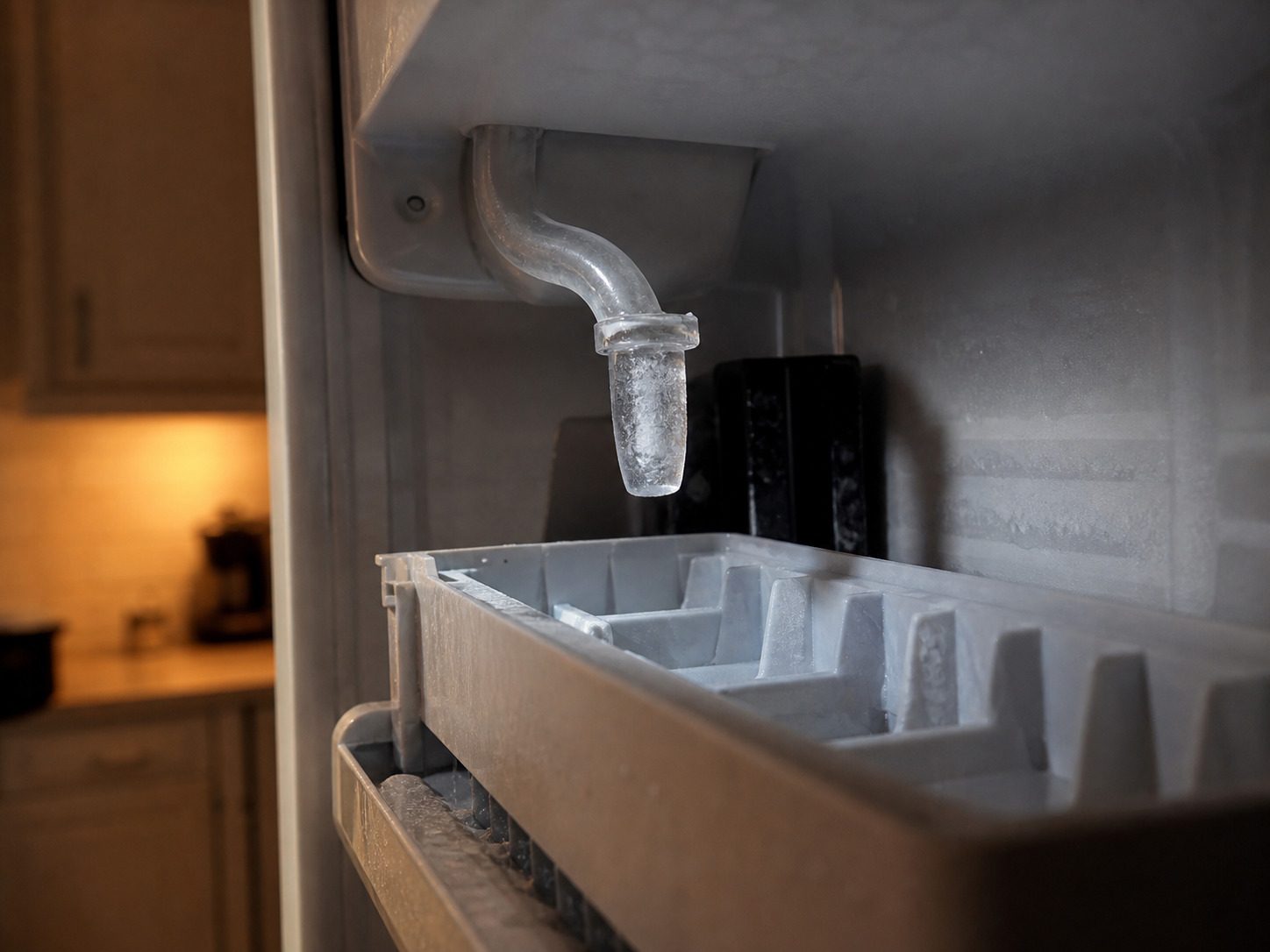
Four: the fill tube has frozen closed
The short tube that delivers the fill into the mold sits in freezing air, and a slow leak past a tired valve lets a little water sit in it between cycles. It freezes, the next fill hits the plug, and water backs up and spills — which is why this one often presents as a sheet of ice under the ice maker rather than as no ice at all.
Melting the plug fixes it for a fortnight. The valve that let the water dribble is the actual repair.
Five: the mold cannot let go
The last link. A small heater warms the mold just enough for the ice to release before the ejector sweeps it out. If it fails, the cycle stalls with a full mold and the machine quietly stops.
This is the point at which it stops being a homeowner job, and it is also the only link on the list where the answer is usually a new ice maker assembly rather than a repair to one.
Why the order is the whole method
Because there is no code and no symptom to sort by, the only defense is sequence. Check the free links first, measure the temperature before assuming the mechanism, and treat the assembly as the last answer rather than the first.
We work the same list in the same order on the visit, which is why the useful things to tell us on the phone are the freezer temperature, whether the dispenser gives water, and whether there is ice building anywhere it should not be.
If it turns out to be a repair
What this leads to, and what it costs
Every job on this site is priced the same way: an on-site diagnostic first, the figure agreed in writing before anybody starts.
-
The bin is empty and nothing is obviously broken Ice maker not making ice
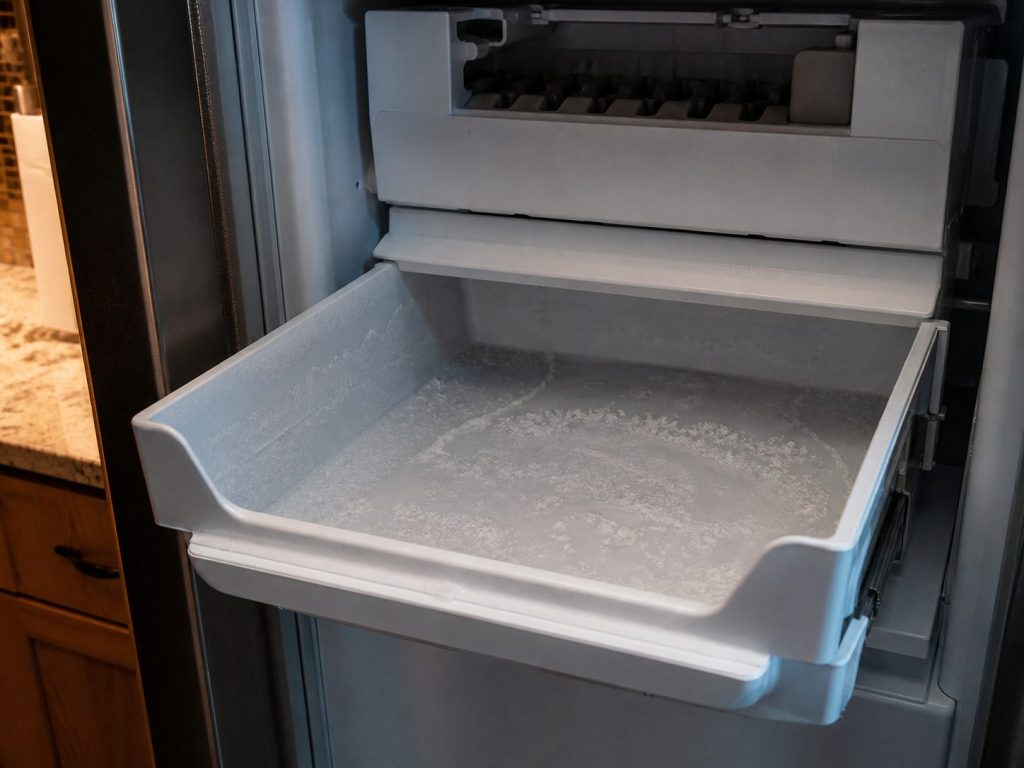
One of the most over-quoted repairs there is. Ice production depends on freezer temperature and on water arriving, and both are cheaper to fix than the ice maker itself — so the sequence matters more here than on almost any other symptom.
- Freezer temperature before the module
- Water supply before the mechanism
- A silted saddle valve is a local classic
-
from $155 Ice maker repair
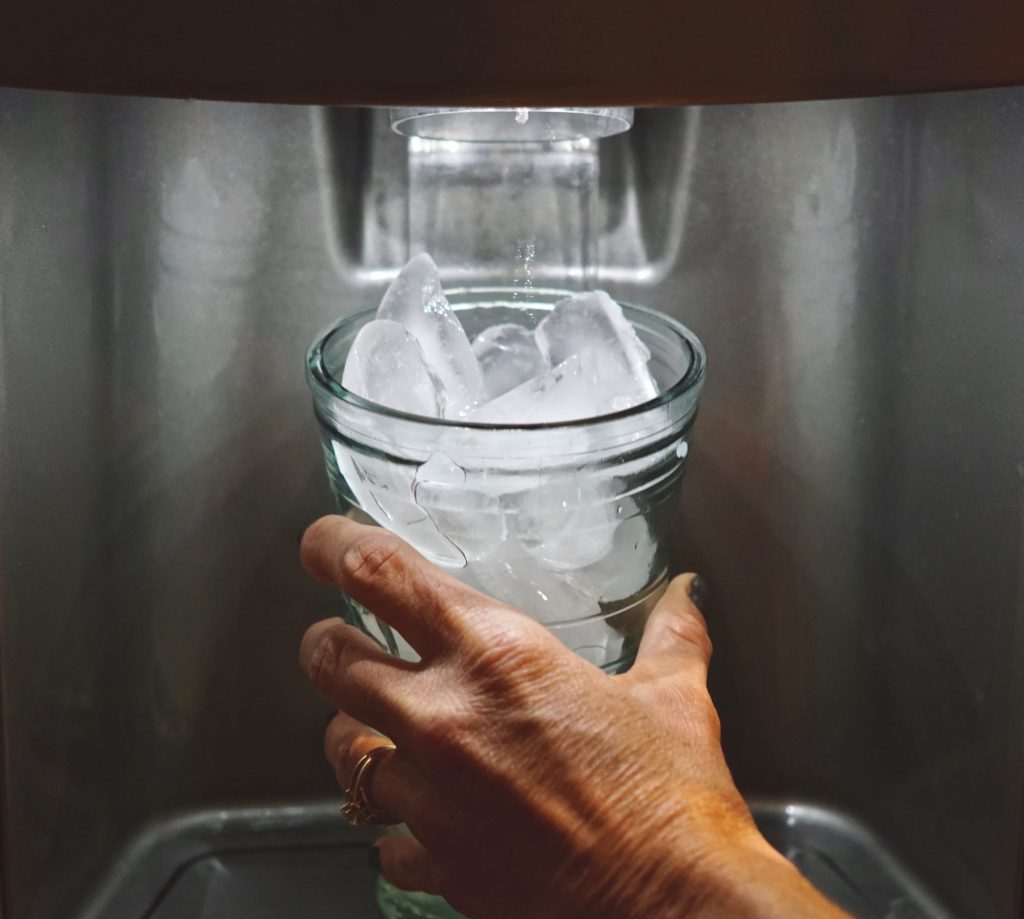
The ice maker inside a refrigerator, which stops for cheaper reasons than most people assume. Production depends on freezer temperature. An ice maker that has slowed is very often reporting a freezer that has crept warm, and correcting that is a smaller and cheaper job than fitting a module.
- Freezer temperature before the module
- Water supply before the mechanism
- The module replaced when the module is the answer
-
from $115 Water dispenser and filter service
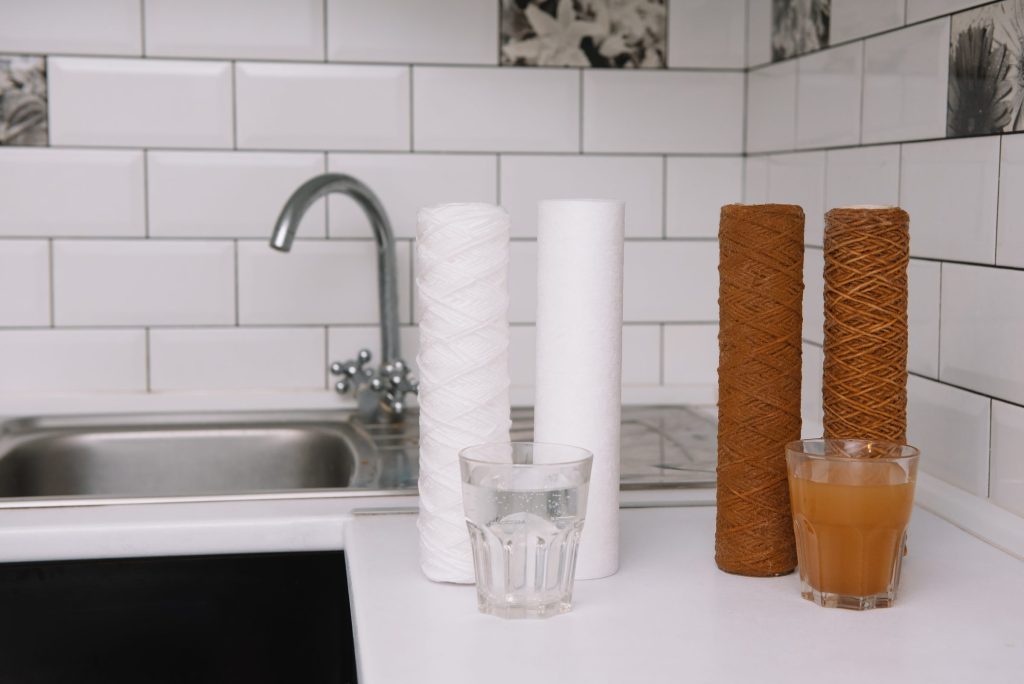
Slow water, no water, or a dispenser that has started dribbling. Cartridges here give up sooner than the calendar on the box suggests, and a good number of these calls finish with a fresh filter and a flushed line rather than a component.
- The filter and the line before the valve
- Local water shortens every published interval
- The line inside the door checked, not assumed
Questions people ask about this
How long should a new ice maker take to start?
Give it a day. The cabinet has to reach temperature, and the first few harvests are usually thin. Judging it after two hours is the commonest reason people call twice.
The dispenser works but there is no ice.
Then water is reaching the door, which clears the supply side. Look at freezer temperature and the fill tube next.
Why is there no error code for this?
Because the ice maker is largely a mechanical device with a thermostat, and none of these manufacturers instruments it well enough to report on it. Silence is the normal presentation.
Ice tastes bad. Is that the same problem?
No — that is a filter or storage question rather than a production one. Ice absorbs whatever is in the freezer, and an old filter contributes its own flavor.
Common Problems
More guides like this one
-
A Kenmore Washer Full of Water: How to Empty It and What to Check
The drum is full, the laundry is soaked, and the machine is not going to help. Here is the order to work in, and where the two machines wearing this badge differ.
Read more -
Water in the Bottom of a Kenmore Refrigerator Is Water It Made Itself
A pool under the crispers is almost never a leak. It is melt water the appliance produced on purpose and could not get rid of, and the blockage is in one place.
Read more -
A Kenmore Refrigerator That Is Not Cooling: Three Machines, Three Answers
The same complaint on a 795, a 106 and a 253 points at different things, because they are an LG, a Whirlpool and a Frigidaire wearing one badge.
Read more
Tell us the model number and what it is doing.
This article is based on:
- Official manufacturer documentation
- Internal repair procedures
- Technician repair history
- Company quality standards