Common Problems
Every Noise a Kenmore Dryer Makes, and Where It Comes From
Locate the noise rather than describing it. A rhythmic thump once per drum revolution is usually a worn drum seal or a flat spot on a support roller, and it gets worse slowly. A high squeal that appears as the drum starts turning is the idler pulley or a dry roller bearing, and it is the noise most likely to end in a broken belt. A hard scrape or grind is something caught between the drum and the bulkhead, or a support roller that has gone altogether, and that one should stop the machine today. A rattle that changes with the airflow is a coin or a button in the blower housing. And a smooth rush of air is the machine working properly.
The full guide
Why is my Kenmore dryer making a loud noise: locate it, do not describe it
Descriptions of noises are almost useless over the phone. Everybody's thump is somebody else's bang. What is genuinely diagnostic is where in the cabinet the sound is coming from and when in the cycle it happens, and you can work both out standing in the doorway with the machine running and empty.
Run it empty. A load of wet towels masks everything and adds noises of its own.
The rhythmic thump
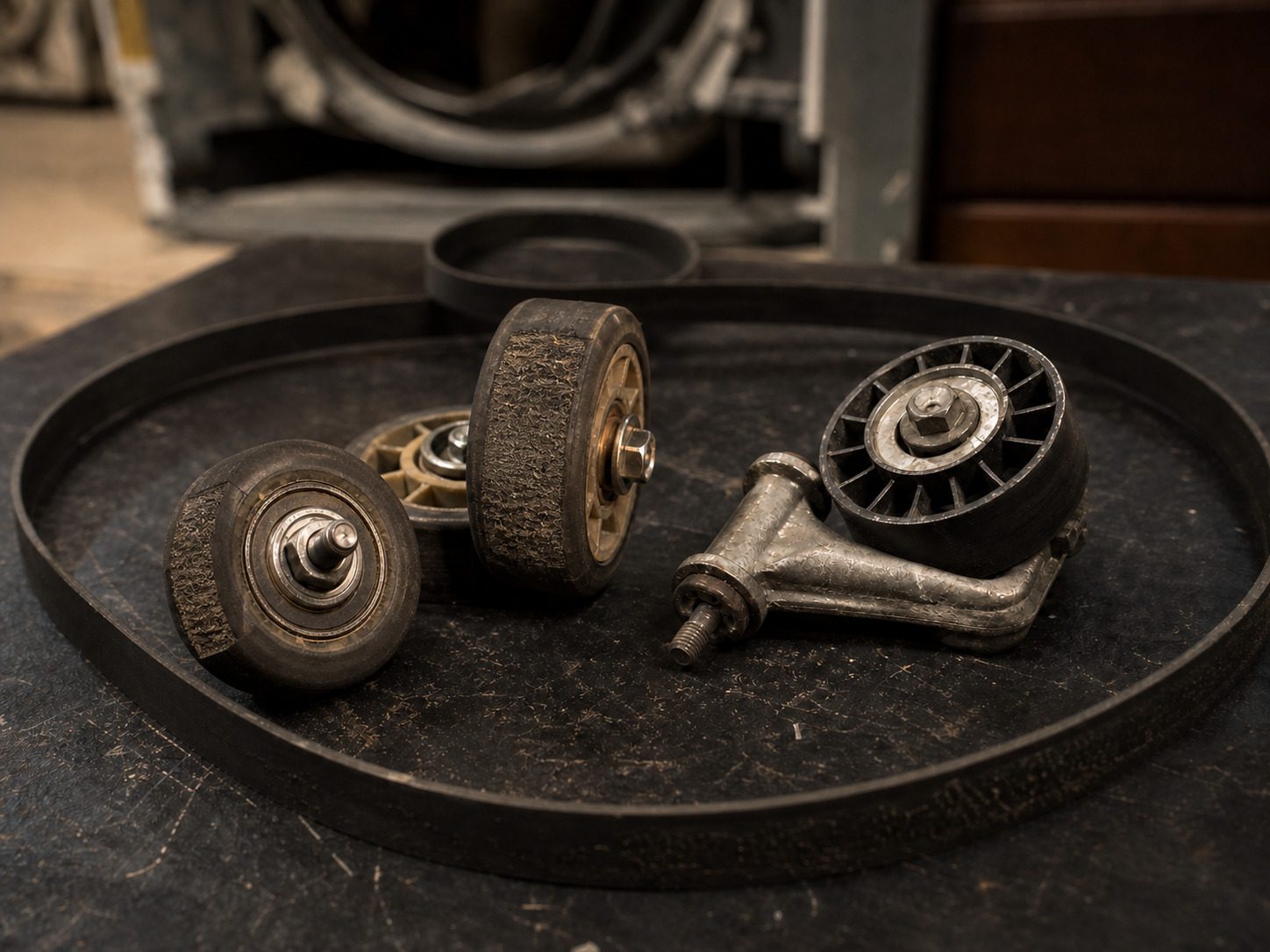
Once per revolution of the drum, steady, more felt than heard on a good day. Two usual sources: the felt seal at the front or rear of the drum has worn through and the drum is riding on metal, or one of the support rollers has developed a flat.
This is the noise that gets slowly worse over months. It is not urgent. It is also not going to improve, and the parts are inexpensive on every one of these machines — the labor is in taking the front off, which is the same labor whether you wait or not.
The squeal
High, thin, worst as the drum begins to turn, sometimes fading once the machine is warm. This is a bearing or a pulley running dry: the idler that keeps tension on the belt, or a roller whose bearing has given up.
Of everything on this page it is the one most likely to end suddenly, because the same tension that squeals is the tension holding the belt on. A squealing dryer that eventually stops turning altogether has not developed a second problem; it has finished the first one.
The scrape, and this is the one that matters
A hard scraping, grinding or metallic dragging sound. Two things usually cause it: something has fallen between the drum and the bulkhead — an underwire, a zip pull, a screw — or a roller has failed completely and the drum is running on its mounting.
Stop using the machine. Not out of caution for its own sake: metal dragging on metal inside a hot cabinet lined with lint is the one mechanical noise on this list that is worth treating as urgent, and the damage a dropped underwire does to a drum in a week costs more than the visit.
The rattle that follows the air
A rattle or buzz that changes as the airflow changes, and that you can sometimes hear more clearly outside at the vent hood, is something loose in the blower housing. Coins are the classic. Buttons, hairgrips and small toys all qualify.
It is not damaging in the short term, and it is a five-minute job at the same time as anything else.
The rush that is not a problem
A smooth, steady rush of moving air is the machine doing exactly what it is for. So is a tumbling thud from the laundry itself, and so is the click of a thermostat cycling.
Worth saying, because half the calls about dryer noise are about a machine that has been moved onto a hard floor or is standing slightly off level, and is now simply audible from the next room.
What to have ready when you call
Which of the five above it sounds most like. Whether it happens all the time or only at the start. Whether the drum turns freely by hand with the power off. And the model number, because the parts belong to whichever company built the machine — a 110 is Whirlpool's, a 796 is LG's, a 417 is Frigidaire's, and the roller kit for one is not the roller kit for another.
If it turns out to be a repair
What this leads to, and what it costs
Every job on this site is priced the same way: an on-site diagnostic first, the figure agreed in writing before anybody starts.
-
A squeal, a rumble or a thump that was not there before Dryer making noise
A useful symptom, because different noises come from different parts and a description on the phone gets us most of the way there. The parts involved are inexpensive; the labor is the cost, which is why they are usually replaced as a set.
- The noise itself narrows it a great deal
- Belt rollers and idler wear together
- Doing one and leaving the others pays the labor twice
-
from $165 Dryer drum roller and belt repair
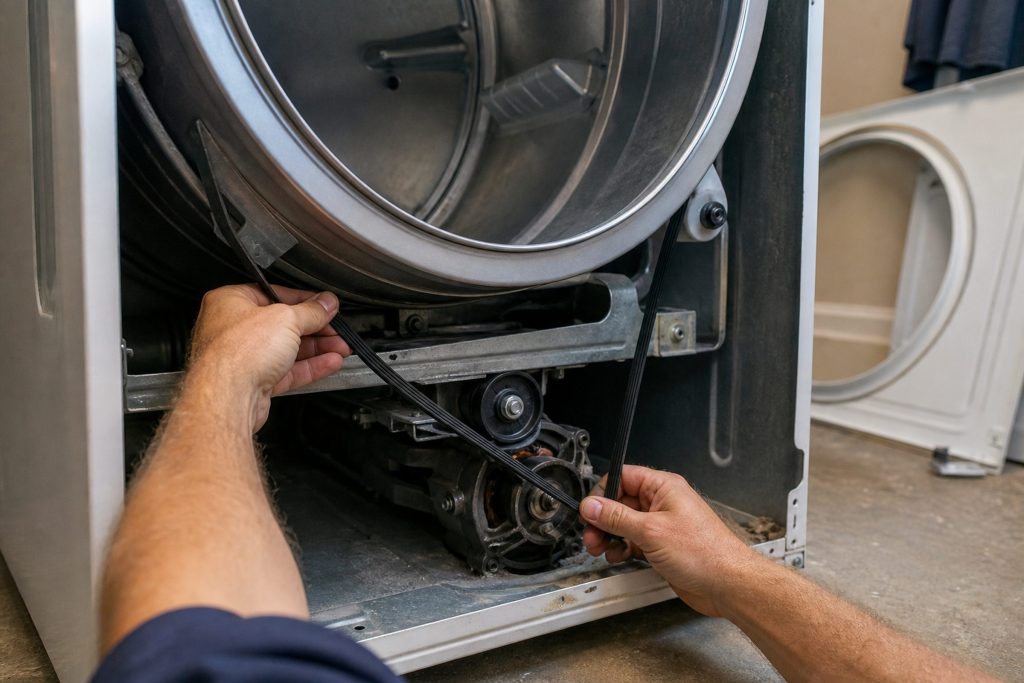
A dryer that squeals, thumps, or turns over without the drum moving. The belt, the rollers and the idler wear together and replacing one of the three on its own usually buys a few months.
- Belt rollers and idler replaced as a set
- The noise identified before anything is opened
- Cheap parts and a real amount of labor
-
from $95 Diagnostic visit
Nobody names a part on this site until somebody has measured something. On this badge the visit starts one step earlier than it does on most makes: with the model number, because the first three digits tell us which manufacturer built the appliance and therefore which service documentation, which diagnostic sequence and which parts catalog apply. Arriving without that is guessing at three appliances at once.
- The prefix read first, then the appliance
- What it reports, measured rather than assumed
- Credited toward the repair when you go ahead

Questions people ask about this
It only squeals for the first minute. Is that fine?
It is the earliest stage of the same problem — a bearing or pulley that is dry when cold and quiets as it warms. It does not go away, and it is cheapest to deal with while it is still doing this.
Can a noisy dryer be dangerous?
A grind can be. Something scraping inside a hot cabinet full of lint is a different category from a thump, which is why that one is the only entry on this page with a same-day answer.
The drum turns by hand but the machine hums and does nothing.
That is not a noise problem, it is a drive problem — a belt off, or a motor that is not starting. Do not keep trying it; a motor stalling repeatedly is how a good motor is ruined.
Does the builder change any of this?
Less than on the electronics. The mechanical layout of a vented dryer is broadly similar whoever built it, so this page applies across the prefixes. The parts and their numbers are the builder's own.
Common Problems
More guides like this one
-
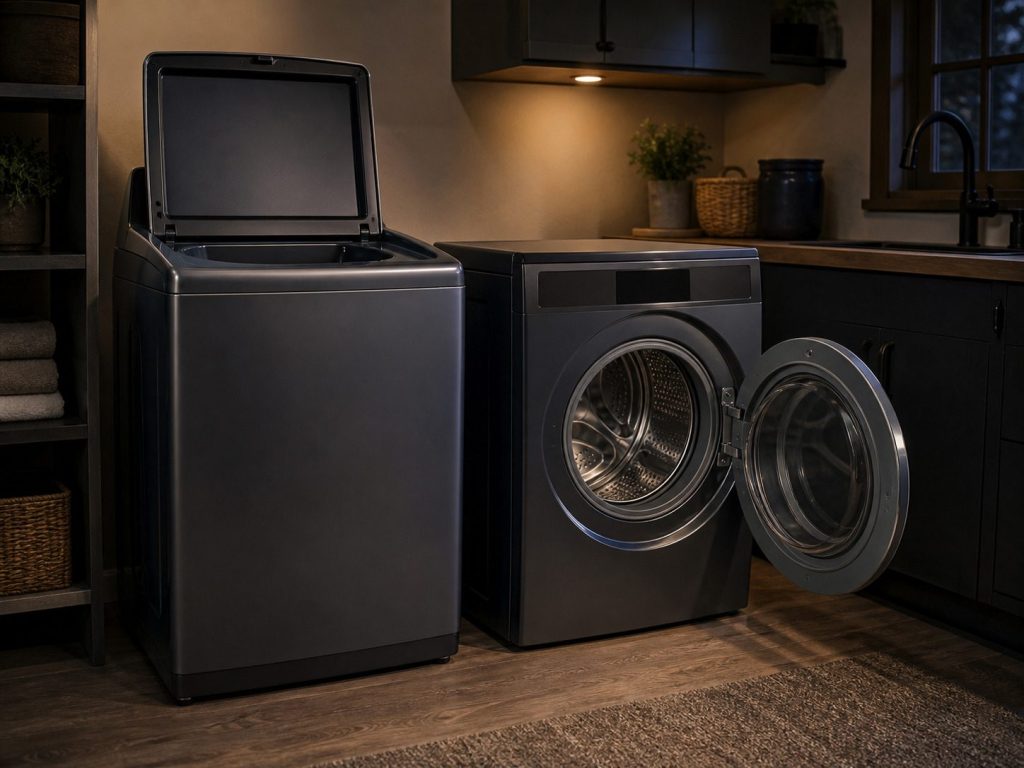
A Kenmore Washer Full of Water: How to Empty It and What to Check
The drum is full, the laundry is soaked, and the machine is not going to help. Here is the order to work in, and where the two machines wearing this badge differ.
Read more -
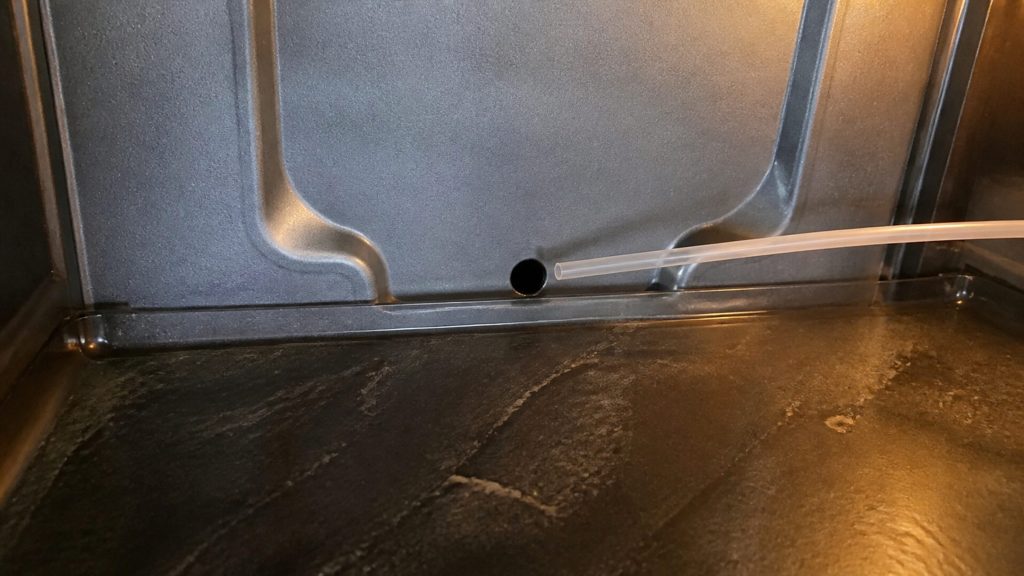
Water in the Bottom of a Kenmore Refrigerator Is Water It Made Itself
A pool under the crispers is almost never a leak. It is melt water the appliance produced on purpose and could not get rid of, and the blockage is in one place.
Read more -
A Kenmore Refrigerator That Is Not Cooling: Three Machines, Three Answers
The same complaint on a 795, a 106 and a 253 points at different things, because they are an LG, a Whirlpool and a Frigidaire wearing one badge.
Read more
Tell us the model number and what it is doing.
This article is based on:
- Official manufacturer documentation
- Internal repair procedures
- Technician repair history
- Company quality standards