Common Problems
A Kenmore Oven That Broils but Will Not Bake, and Other Splits
An oven cavity has two separate heat sources on two separately switched circuits: a broil element or ignitor at the roof, and a bake element or ignitor under the floor. So the first question is which half still works. An oven that broils but will not bake has proved its supply, its control, its door and its temperature sensing are all healthy and has narrowed the repair to the bake half alone — usually an element that has failed open, or on a gas range an ignitor that no longer draws enough current to open the safety valve. An oven where neither half heats points at supply, the control or the sensor instead. And an oven that heats but heats wrongly is a calibration or sensor question, not a heating one, which is why the Frigidaire-built ranges publish an open-probe code of their own.
The full guide
Kenmore oven not heating but broiler works: read the split
Almost nobody volunteers this, and it is the single most useful thing an owner can say about an oven that is not heating: does the broiler still work?
An oven cavity carries two heat sources — one at the roof for broiling, one under the floor for baking — and each has its own switched circuit from the control. They share a box and almost nothing else.
So an oven that broils happily and will not bake has already proved a great deal. Power is arriving. The control is switching. The door switch is behaving. Temperature sensing is working well enough to run a cycle. The problem is in the bake half alone, and that is usually a single component.
The reverse split proves the same things about the broil half.
What fails, per half
On an electric oven, the element itself. It fails open, and often visibly: a blister, a bright spot, a break, or a patchy glow along its length. Elements are consumables, they are inexpensive on every one of these ranges, and the labor is straightforward because they mount at the back of the cavity.
On a gas oven, the ignitor, and the mechanism is worth understanding because it explains a confusing symptom. The ignitor has to get hot *and* draw enough current to open the gas safety valve. As it ages it still glows — sometimes brightly — but stops pulling enough current to open the valve. So you see it working, you smell nothing, and the oven never lights. A glowing ignitor is not proof of a healthy one.
When neither half heats
Now the shared parts are in question: the supply to the appliance, the control board, the door lock circuit on a range that has one, and the temperature sensor.
The sensor is worth its own line. On a Frigidaire-built 790 there is a published code for an open probe, and another for the oven reading higher temperatures than it should — the manufacturer's own name for that second one is thermal runaway. Both are the appliance saying that its temperature information has stopped being trustworthy, which is a reason to stop using it rather than to work around it.
Heats, but wrongly
A different complaint that arrives under the same words. Everything works, and cakes take an hour and a half, or the top burns while the middle stays raw.
Three usual causes. Calibration drift, which most of these ovens allow you to correct from the control panel. A sensor reading a few degrees off, which is a part rather than a setting. And a door seal that has hardened, which lets heat out continuously and is the cheapest of the three by a distance.
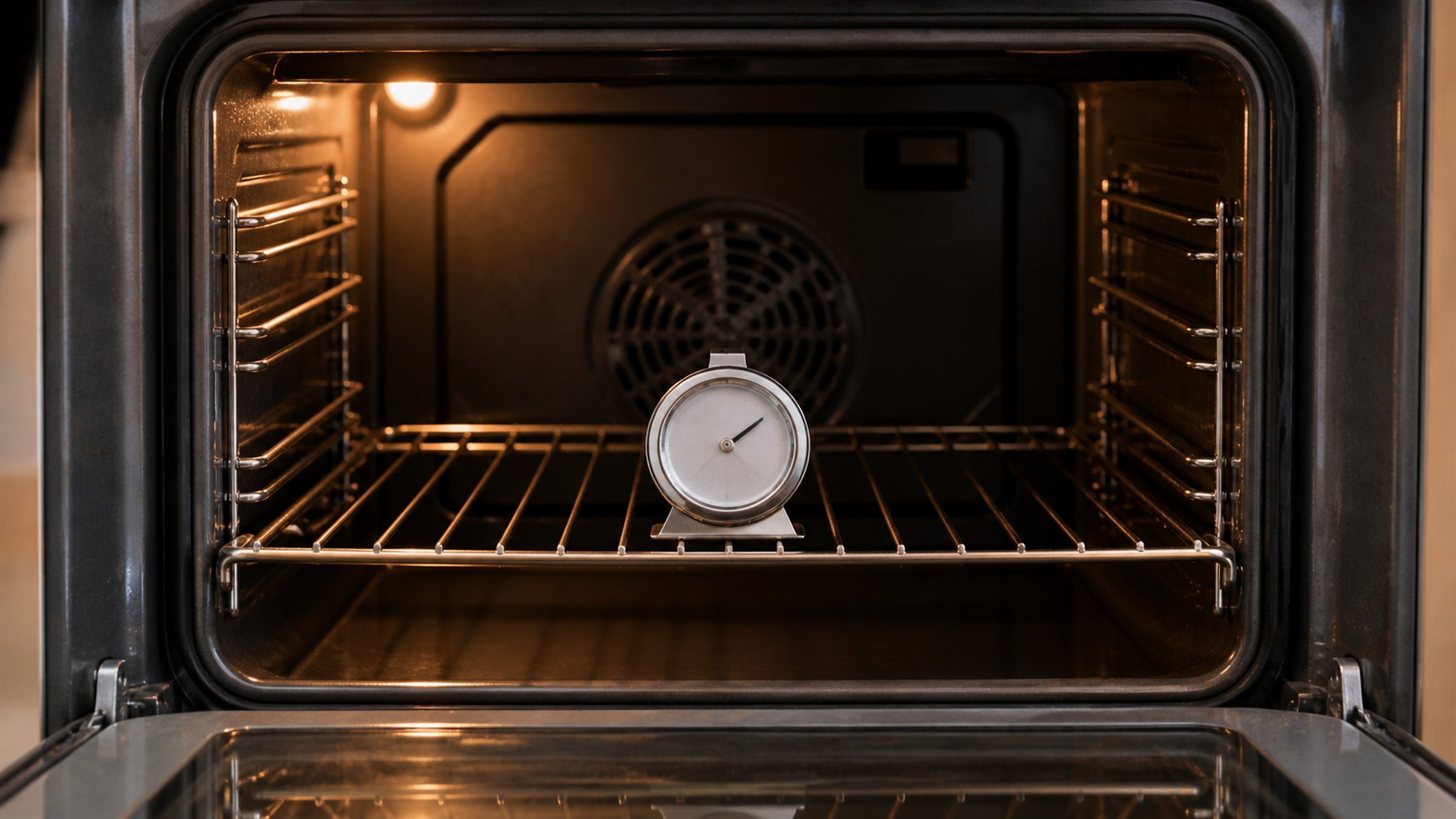
Test it before assuming: an oven thermometer on the middle shelf, preheated for a full twenty minutes rather than until the beep. The beep on most of these ranges means the air has reached temperature, not the cavity walls, and a cake put in at the beep goes into an oven that is not ready.
What the three digits change here
Less about the mechanism, more about what the machine can tell you and where the parts come from.
A 790 is Frigidaire-built and has a published code set, including the door-lock family that appears after a self-clean cycle. A 362 is GE-built. A 911 is Roper-built and publishes nothing at all — its own documentation is symptom-based, so an owner searching for a code list is searching for something that was never written.
Knowing which you have decides whether a silent display is a missing feature or a missing message.
If it turns out to be a repair
What this leads to, and what it costs
Every job on this site is priced the same way: an on-site diagnostic first, the figure agreed in writing before anybody starts.
-
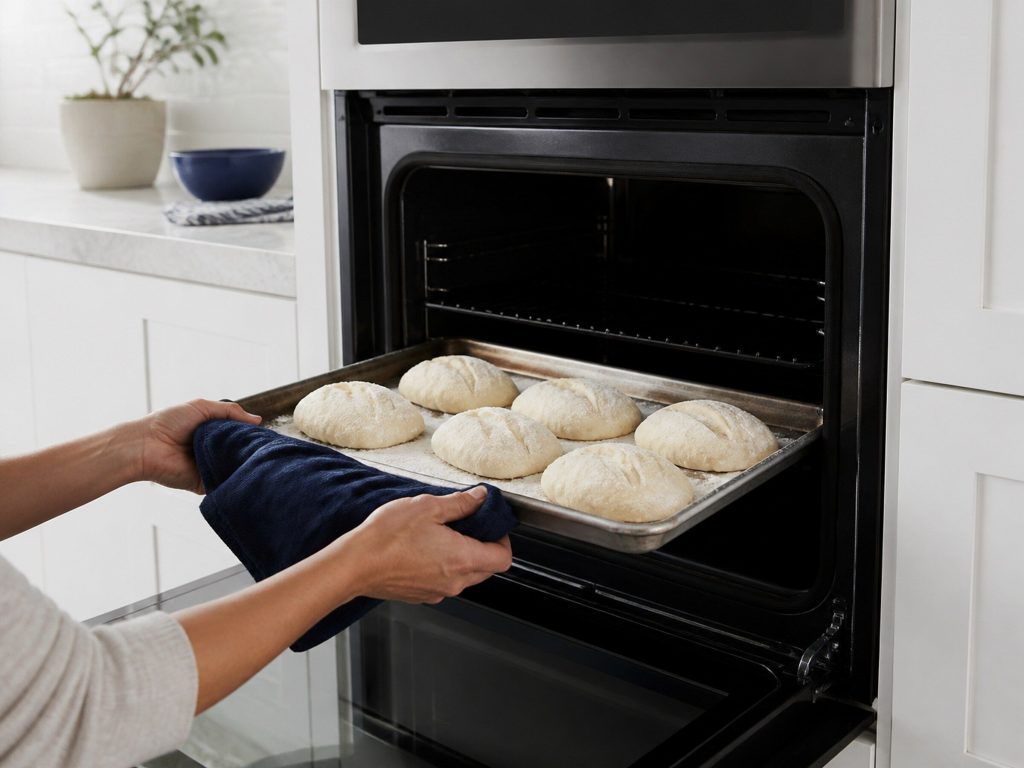
It will not reach temperature, or takes far too long Oven not heating
Two answers cover most of these and they are cheap to tell apart. A failed bake element usually shows itself, and a temperature sensor that has drifted does not show anything at all — it simply reports the wrong number and the oven confidently holds a temperature it is not at.
- A bake element usually shows visible damage
- A sensor problem shows nothing at all
- A consistent offset is the sensor's signature
-
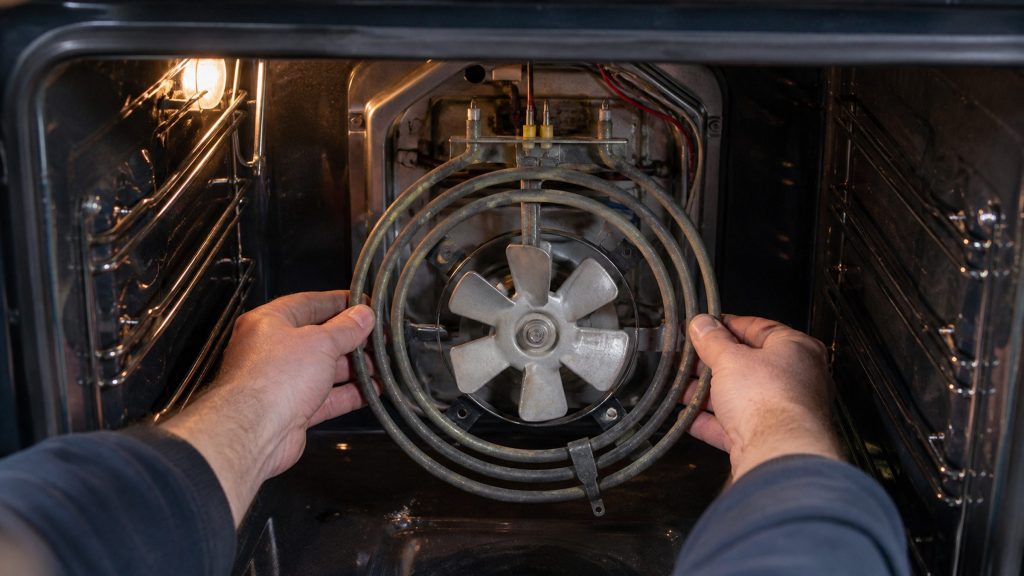
from $165 Oven element replacement
An oven that will not reach temperature, or one that browns the top and never cooks through. A failed bake element often shows it — a blister, a break, a bright spot — and it is one of the few appliance repairs where looking is genuinely diagnostic.
- Usually visible, and always tested as well
- Bake and broil are separate elements
- The sensor ruled out at the same time
-
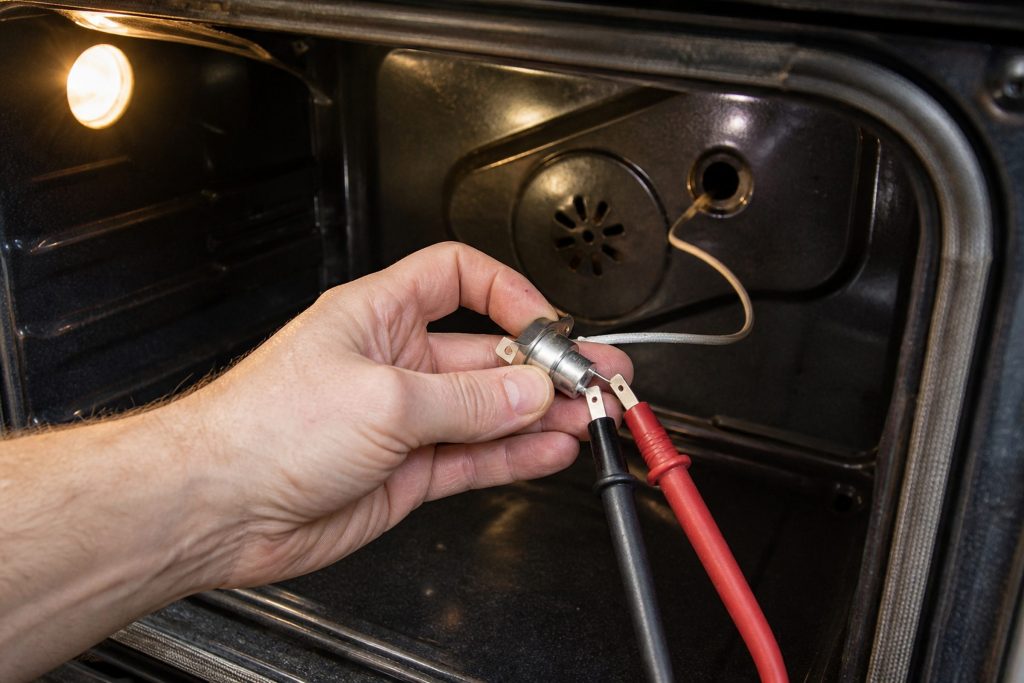
from $145 Oven sensor and calibration service
An oven that is consistently out by a fixed amount, or one that overshoots and undershoots. The first is often a calibration offset the control already provides for; the second is usually the temperature sensor, and calibrating around it only hides it.
- A fixed offset and a drifting one are different problems
- Measured against a reference probe
- Calibration where calibration is the honest answer

Questions people ask about this
The element glows in places and not others.
That is an element on its way out, and it will fail completely soon. A glow that is patchy or a visible blister or break is enough to call it without any testing.
My gas oven clicks and then gives up.
On most gas ovens the ignitor has to draw enough current to open the gas valve. As it ages it glows without reaching that threshold, so you get heat from the ignitor, no flame, and a machine that eventually stops trying.
Everything cooks slowly. Is that the same thing?
Usually not. Slow cooking with both halves working is a calibration or sensor question, and it is also often a door seal letting heat out.
Does the prefix change the repair?
It changes the parts and the documentation. A 790 is Frigidaire-built, a 362 is GE-built, a 911 is Roper-built and publishes no code table at all, so what the appliance can tell you differs even where the mechanism does not.
Common Problems
More guides like this one
-
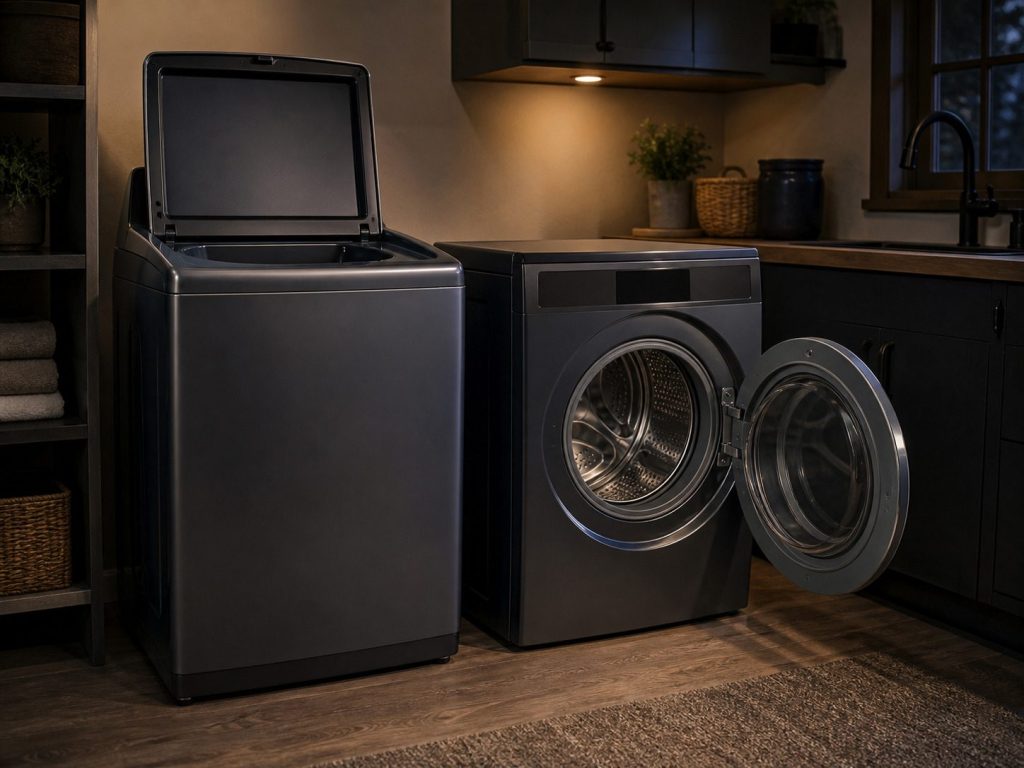
A Kenmore Washer Full of Water: How to Empty It and What to Check
The drum is full, the laundry is soaked, and the machine is not going to help. Here is the order to work in, and where the two machines wearing this badge differ.
Read more -
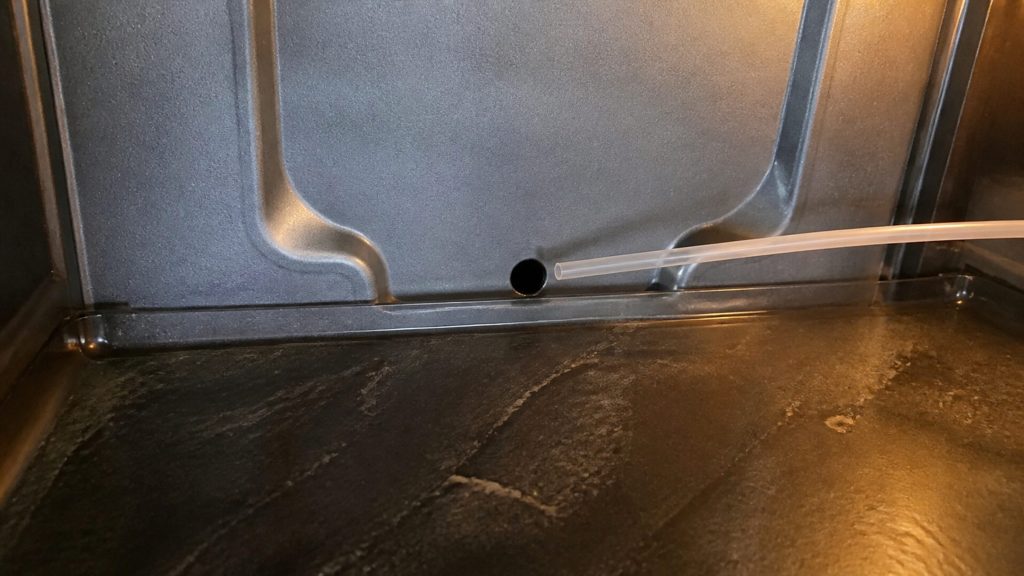
Water in the Bottom of a Kenmore Refrigerator Is Water It Made Itself
A pool under the crispers is almost never a leak. It is melt water the appliance produced on purpose and could not get rid of, and the blockage is in one place.
Read more -
A Kenmore Refrigerator That Is Not Cooling: Three Machines, Three Answers
The same complaint on a 795, a 106 and a 253 points at different things, because they are an LG, a Whirlpool and a Frigidaire wearing one badge.
Read more
Tell us the model number and what it is doing.
This article is based on:
- Official manufacturer documentation
- Internal repair procedures
- Technician repair history
- Company quality standards