110 is Whirlpool, 796 is LG, 790 is Frigidaire. Their code schemes overlap enough to be convincing — several use F-and-number pairs for entirely unrelated conditions — so a code looked up on a page that does not name the manufacturer is a coin toss dressed as an answer. Read the prefix, then read the code. Ten seconds, and it decides whether the right component gets replaced.
93 codes · 39 signals · 3 manufacturers
There is no such thing as a Kenmore error code. Every one of these belongs to the company that built your appliance.
Kenmore manufactures nothing, so the characters on your display are Whirlpool's, LG's or Frigidaire's. Which one depends on the first three digits of your model number, and reading a code against the wrong company's table gives you a confident answer pointing at the wrong part. Every page here names the manufacturer, cites the document, and lists the prefixes it applies to.
- 93 codes with a published meaning
- 39 signals and indicators
- 3 manufacturers covered
- 0 codes we made up
The whole archive
Every code and signal, by manufacturer and appliance
Filter by the company that built your appliance, then by the appliance itself. Both filters matter and the first one matters more.
- Sud Too many suds in the drum Whirlpool-built · Washers
- oL The load is too large for the machine to handle Whirlpool-built · Washers
- uL The load is out of balance and the machine Whirlpool-built · Washers
- LF The washer is taking too long to fill, or Whirlpool-built · Washers
- Ld The washer is taking too long to drain — Whirlpool-built · Washers
- LdL The lid lock will not lock Whirlpool-built · Washers
- LdU The lid cannot unlock — the machine has detected Whirlpool-built · Washers
- PF The cycle was interrupted by a power failure Whirlpool-built · Washers
- HC The hot and cold inlet hoses have been connected Whirlpool-built · Washers
- CL A reminder that the Clean Washer cycle is due Whirlpool-built · Washers
- Lid The lid was left open Whirlpool-built · Washers
- Int The cycle was paused or canceled Whirlpool-built · Washers
- LOC The control lock is on, so the buttons do nothing Whirlpool-built · Washers
- dET The detergent dispenser cartridge is not detected Whirlpool-built · Washers
- Fd The machine is in factory default settings — it Whirlpool-built · Washers
- Err The machine is refusing a change you asked for Whirlpool-built · Washers
- F0 E2 Whirlpool's wording: the washer detected too many suds during Whirlpool-built · Washers
- F0 E3 The load is too heavy and the machine has Whirlpool-built · Washers
- F0 E4 The washer senses the incoming water is too hot Whirlpool-built · Washers
- F0 E8 Too much residual water was detected in the machine Whirlpool-built · Washers
- F2 E3 Whirlpool's wording: an issue with the appliance control unit, Whirlpool-built · Washers
- F3 E1 The washer cannot detect the water level, which points Whirlpool-built · Washers
- F3 E2 The hot and cold inlet hoses are connected the Whirlpool-built · Washers
- F3 E5 An issue with the bulk or mini detergent dispenser Whirlpool-built · Washers
- F5 E2 The washer cannot engage the lid lock — Whirlpool's Whirlpool-built · Washers
- F5 E3 The door or lid is not locking properly Whirlpool-built · Washers
- F5 E4 The washer has run three cycles in a row Whirlpool-built · Washers
- F7 E1 A motor speed sensing error — the motor cannot Whirlpool-built · Washers
- F8 E2 A problem with the dispenser system Whirlpool-built · Washers
- F8 E3 An overflow condition: too much water or too much Whirlpool-built · Washers
- F8 E6 Whirlpool gives two causes: the lid was opened during Whirlpool-built · Washers
- F20 A water inlet problem: no water, or not enough of it Whirlpool-built · Washers
- F21 A drain problem Whirlpool-built · Washers
- F22 A front door lock problem Whirlpool-built · Washers
- AF Restricted air flow Whirlpool-built · Dryers
- F4 E1 A problem with the heater or the heater relays Whirlpool-built · Dryers
- F4 E4 Low or no line voltage Whirlpool-built · Dryers
- F3 E2 Whirlpool's wording: five consecutive loads were dried without the Whirlpool-built · Dryers
- F3 E3 Whirlpool identifies this as an inlet thermistor problem — Whirlpool-built · Dryers
- F1 E3 Whirlpool's wording: an issue with the control unit or Whirlpool-built · Dryers
- F2 E4 An issue with the user interface or its wiring Whirlpool-built · Dryers
- F6 E1 A problem with the main control board, the touchpad, Whirlpool-built · Dryers
- F7 E1 A problem with the motor, the control, or the wiring between them Whirlpool-built · Dryers
- PF A power failure interrupted the drying cycle Whirlpool-built · Dryers
- Loc The control lock is on Whirlpool-built · Dryers
- ERR Whirlpool's wording: the door has not been completely closed Whirlpool-built · Dryers
- F9 E1 Whirlpool's own label is Long Drain: the dishwasher is not draining properly Whirlpool-built · Dishwashers
- F9 E2 A drain motor error Whirlpool-built · Dishwashers
- F8 E5 The fill valve is stuck open — the machine Whirlpool-built · Dishwashers
- H2O Whirlpool's own wording: not detecting water Whirlpool-built · Dishwashers
- F8 E2 A fill valve electrical error Whirlpool-built · Dishwashers
- F6 E3 Whirlpool's own label: excessive suds Whirlpool-built · Dishwashers
- F6 E4 The water float switch Whirlpool-built · Dishwashers
- F4 E2 The heating system Whirlpool-built · Dishwashers
- F3 E2 The thermistor or the water quality sensor Whirlpool-built · Dishwashers
- F7 E2 A wash motor error Whirlpool-built · Dishwashers
- FA E4 A diverter valve error Whirlpool-built · Dishwashers
- FA E5 A diverter leak Whirlpool-built · Dishwashers
- F1 E1 Whirlpool's own label: control module Whirlpool-built · Dishwashers
- F1 E2 A main control communication error — the two halves Whirlpool-built · Dishwashers
- F2 E1 A stuck key or a console error Whirlpool-built · Dishwashers
- F6 E1 A user interface error, or the main control Whirlpool-built · Dishwashers
- Clean light flashing Whirlpool's own wording: a flashing clean light usually means Whirlpool-built · Dishwashers
- Control light flashing The light flashes three times when a button is Whirlpool-built · Dishwashers
- Sanitize light flashing Whirlpool's wording: the sanitize indicator flashes when the machine Whirlpool-built · Dishwashers
- Cycle lights flashing Whirlpool's wording: all selected cycle and option lights flash Whirlpool-built · Dishwashers
- Front status light The light projected on the floor or the door Whirlpool-built · Dishwashers
- PO Whirlpool's own wording: the power outage indicator tells you Whirlpool-built · Refrigerators +1 more
- Door alarm The alarm sounds when a door or the freezer Whirlpool-built · Refrigerators +1 more
- Temperature alarm Whirlpool's own thresholds: it alerts when the refrigerator rises Whirlpool-built · Refrigerators +1 more
- Cooling off Whirlpool's wording: the refrigerator and freezer will not cool Whirlpool-built · Refrigerators +1 more
- H2O The filter status light telling you the water filter is due Whirlpool-built · Refrigerators
- Air filter indicator The air filter status, in three stages: blue is Whirlpool-built · Refrigerators
- Flashing F Whirlpool publishes the fact that an F is flashing Whirlpool-built · Refrigerators +1 more
- OE LG's own label is WATER OUTLET ERROR — the LG-built · Washers
- IE LG's own label is INLET ERROR: the tub is LG-built · Washers
- UE LG's own label is UNBALANCE ERROR: the laundry has LG-built · Washers
- dE On a front-loader LG's label is DOOR OPEN ERROR LG-built · Washers
- dE2 The door is closed but is not locking LG-built · Washers
- tE LG's own label is TEMPERATURE SENSOR ERROR LG-built · Washers
- FE LG's own label is OVERFLOW ERROR — there is LG-built · Washers
- PE LG's own label is PRESSURE SENSOR ERROR — the LG-built · Washers
- LE LG's own label is MOTOR LOCKED ERROR LG-built · Washers
- LE1 LG's own label is FOREIGN OBJECT ERROR on a LG-built · Washers
- dL LG's own label is LID LOCK ERROR on a top-loader LG-built · Washers
- Eb LG's own label is CLUTCH ERROR on a top-loader LG-built · Washers
- Ps LG's own label is SUPPLY VOLTAGE ERROR on a LG-built · Washers
- vS LG's own label is VIBRATION SENSOR ERROR on a LG-built · Washers
- bU LG's own label is VIBRATION ERROR LG-built · Washers
- FF LG's own label is FROZEN ERROR — the temperature LG-built · Washers
- PF LG's own label is POWER FAILURE — the supply LG-built · Washers
- CL LG's own label is CONTROL LOCK FUNCTION — the LG-built · Washers
- tcL LG's own label is TUB CLEAN ALARM — a LG-built · Washers
- dr LG's own label is DRAIN FEATURE on a top-loader LG-built · Washers
- Sud Excessive suds LG-built · Washers
- AE LG's wording: a leakage error — a problem with LG-built · Washers
- CE LG's wording: an over-current error — a short circuit, LG-built · Washers
- d80 LG's own label is DUCT BLOCK ERROR, and the LG-built · Dryers
- tE1 LG's own label is TEMPERATURE SENSOR ERROR — the LG-built · Dryers
- Ps LG's own label is POWER ERROR LG-built · Dryers
- [L LG's own label is CONTROL LOCK FUNCTION LG-built · Dryers
- gAS No gas supply LG-built · Dryers
- LE1 LG's wording: the drum is not rotating, from a motor problem LG-built · Dryers
- Er FF A freezer fan problem LG-built · Refrigerators +1 more
- Er rF A refrigerator fan problem — the same class of LG-built · Refrigerators
- F dH A defrost heater circuit problem LG-built · Refrigerators +1 more
- CH A sealed-system problem — LG's published meaning is a LG-built · Refrigerators +1 more
- Sb Sabbath mode LG-built · Refrigerators
- F10 Frigidaire's own wording: F10 indicates the oven is detecting higher-than-normal temperatures Frigidaire-built · Ranges +1 more
- F30 Frigidaire's own label: open probe Frigidaire-built · Ranges +1 more
- F31 Frigidaire's own label: shorted probe Frigidaire-built · Ranges +1 more
- F1 Frigidaire's own label: shorted key pad Frigidaire-built · Ranges
- F90 Frigidaire's own label: a door lock issue Frigidaire-built · Ranges +1 more
- F40 Frigidaire's own label: cooktop lock out Frigidaire-built · Ranges +1 more
- F3 Frigidaire's own label: communication error — the parts of Frigidaire-built · Ranges +1 more
- F12 Frigidaire names these micro identification and E prompt failure Frigidaire-built · Ranges
- Dash A dash in the display means the cooktop is locked Frigidaire-built · Ranges +1 more
- Demo mode The oven is running in demonstration mode: the panel Frigidaire-built · Ranges +1 more
- i20 Frigidaire's own wording: i20 indicates the dishwasher is not Frigidaire-built · Dishwashers
- i40 Frigidaire's own wording: a clogged filter or sump, from Frigidaire-built · Dishwashers
- PF Loss of power — the machine experienced an interruption Frigidaire-built · Dishwashers
- LOC The door is locked Frigidaire-built · Dishwashers
- CL Frigidaire's own wording: the door is open, and it Frigidaire-built · Dishwashers
- Hd Frigidaire's own wording: the machine is in heat delay Frigidaire-built · Dishwashers
- L0 The rinse aid dosage level on models that show it Frigidaire-built · Dishwashers
- Delay hours A number from 1 to 24 in the display Frigidaire-built · Dishwashers
- PF Frigidaire's own wording: the power failure light indicates an Frigidaire-built · Refrigerators +1 more
- HI Frigidaire's own wording: HI blinking on the temperature display Frigidaire-built · Refrigerators +1 more
- Door ajar Frigidaire's own wording: a door has been left open Frigidaire-built · Refrigerators +1 more
- SB Sabbath mode — Frigidaire's wording is that it makes Frigidaire-built · Refrigerators
- 77 77 Demo mode Frigidaire-built · Refrigerators +1 more
- DI SP Frigidaire's own wording: ice is jammed in the chute Frigidaire-built · Refrigerators
No code here matches that. Codes differ between series, and some are only shown on the service display — call (305) 680-1018 with the model number and what the display is doing.
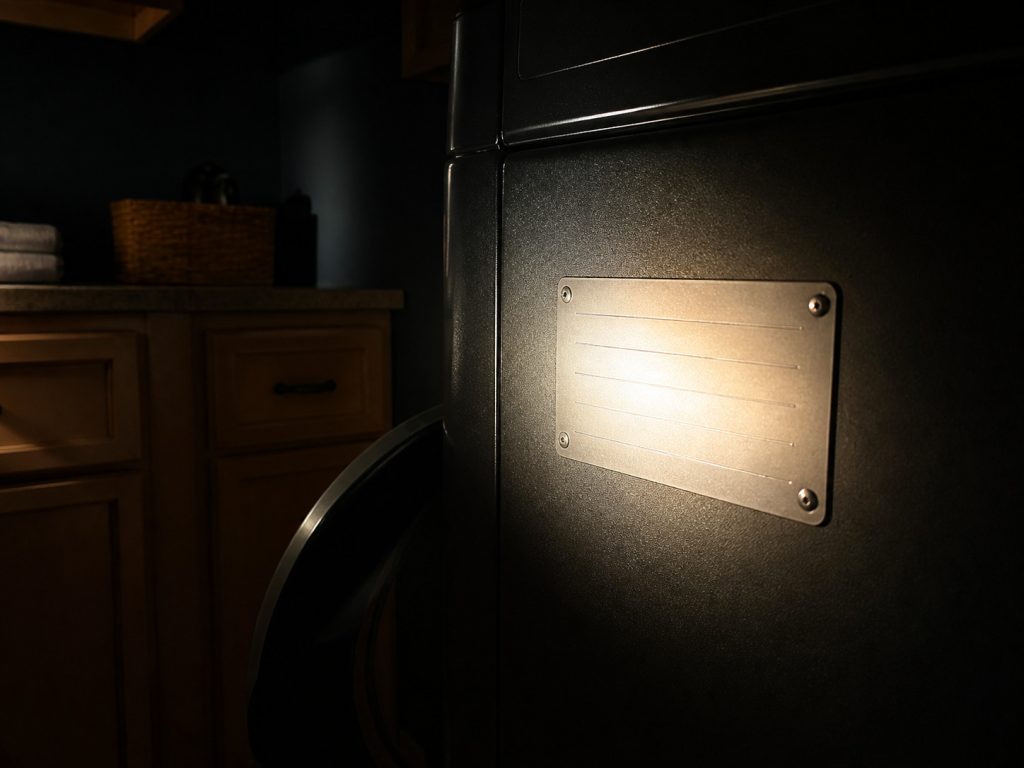
The manufacturer comes first on this make. The same characters appear in more than one company's table meaning unrelated things, and the three digits before the period on your rating plate are what tells them apart.
The distinction that costs the most
The first three digits decide which table your code lives in
What the first three digits mean
What is deliberately not on this page
Where a manufacturer publishes nothing, so do we
Roper publishes no codes at all, so a 911 range has no table here and is diagnosed by symptom. Whirlpool names fourteen refrigerator F-codes and never says what separates one from another, so there is one honest page saying that rather than fourteen invented ones. Frigidaire’s dryer code page exists with an empty body, and its SY and Er refrigerator codes are named and left undefined. Nobody publishes a cooktop, range hood or standalone ice maker table. A page that can say nothing is not a page.
Reading a code properly
Four things that decide whether a lookup is even valid
Photograph it first
- Cutting power clears the display, and cutting power is the first thing most people try.
- Include the digits after the letter — F3 and F8 are different families.
- On machines with no display, count the flashes and the pauses.
Find your prefix
- The three digits before the period on the rating plate.
- They name the manufacturer, and the manufacturer owns the code.
- Kenmore, Elite and Pro tell you nothing useful here.
Watch the case and the shape
- LG prints duct-block codes as d8O and dGs because of how a segment display draws digits — no LG document prints d80 with plain numerals.
- LG's own manual writes the control lock as [L where the help library writes CL.
- On a two-character display LG shows LE first and then the 1, so LE and LE1 look alike for a moment and are different findings.
Know what is not a problem
- Power failure, control lock, Sabbath mode, demonstration mode and tub-clean reminders are all published as codes and none of them is a defect.
- 39 of the entries on this page are signals rather than errors.
- A number in a Frigidaire dishwasher display is a delay-start setting in hours.
Nothing on the display to look up
Then the behavior is the way in
Some of the companies behind this nameplate issue no table whatsoever. Where that is true, the behavior is not a hint — it is the diagnosis.
-
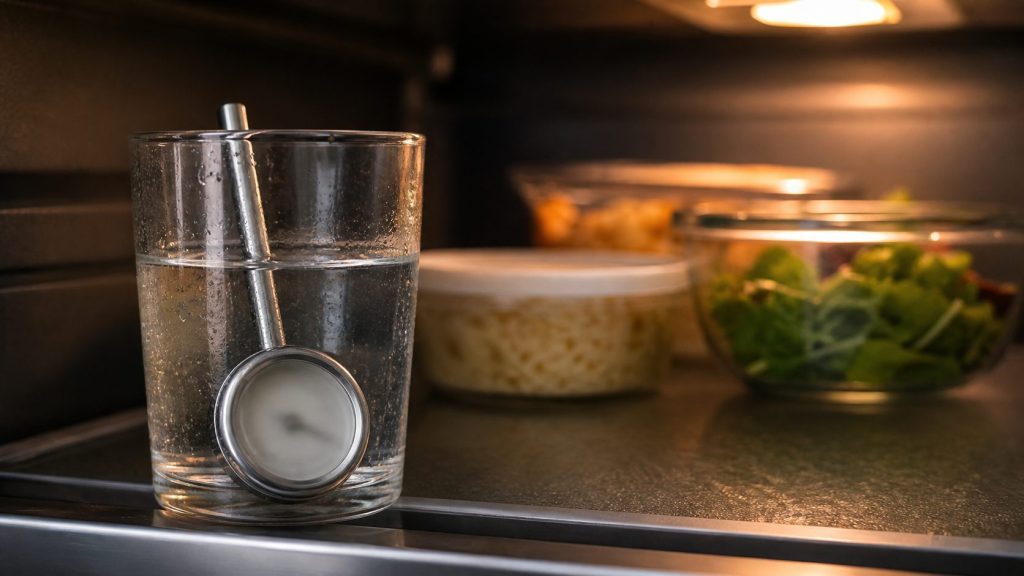
Everything works except the cold Refrigerator not cooling
The call we take more often than any other, and on this badge the one where the number on the sticker changes the answer most. Three different manufacturers built the Kenmore refrigerators in South Florida kitchens, and they arrive at a warm cabinet by different routes and report it in different words.
- Three builders, three first suspects
- Two settings account for a real share of these
- The sealed system is last, not first
-
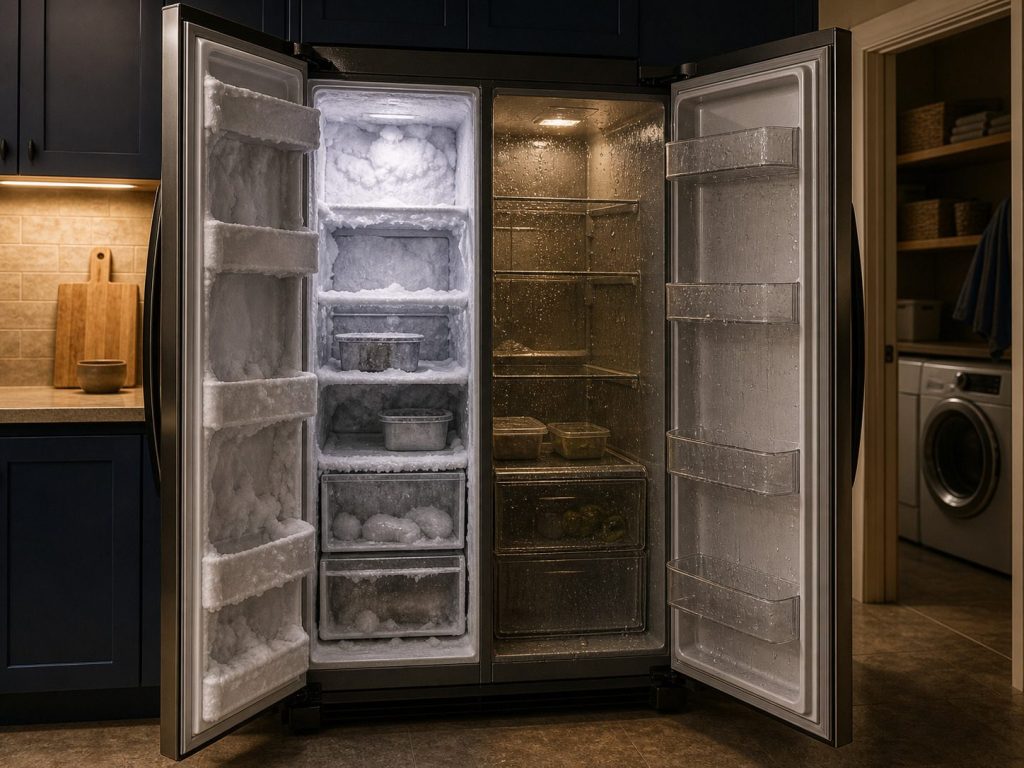
One half working and the other not Refrigerator warm and freezer cold
A specific and useful symptom, because it says the cold is being made and is not getting where it needs to go. That rules out most of the expensive answers before anybody opens anything, and it points at a short list that is the same on every builder.
- The cold is being made — it is not arriving
- Rules out the sealed system almost immediately
- Usually defrost, a fan, or a damper
-
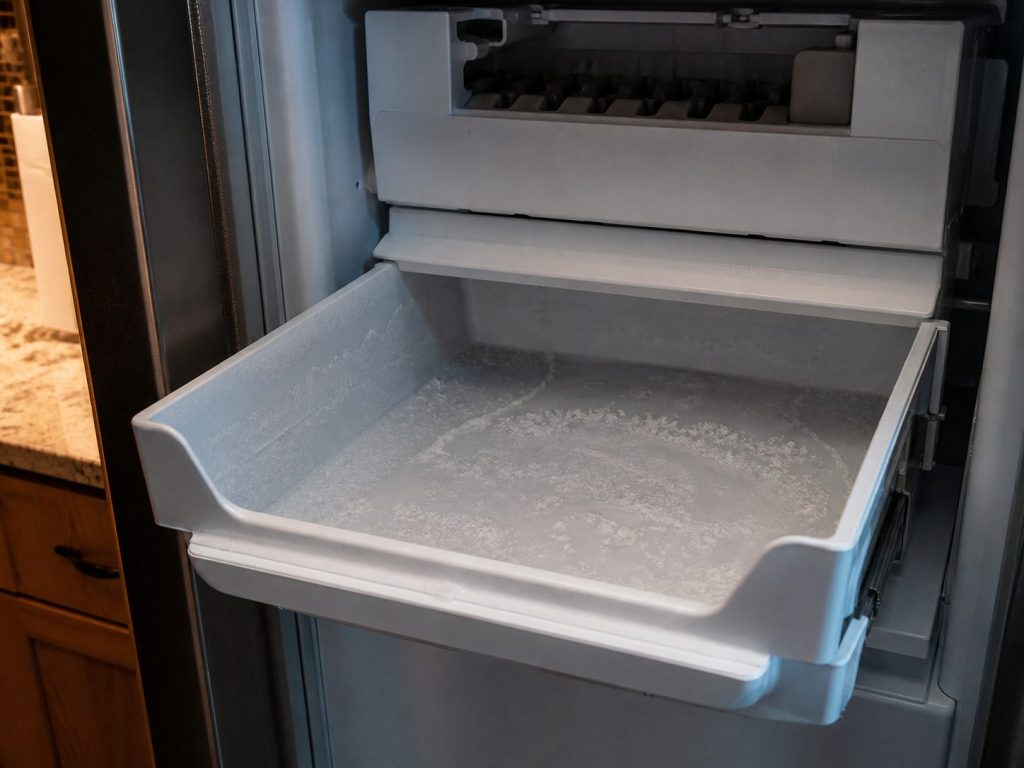
The bin is empty and nothing is obviously broken Ice maker not making ice
One of the most over-quoted repairs there is. Ice production depends on freezer temperature and on water arriving, and both are cheaper to fix than the ice maker itself — so the sequence matters more here than on almost any other symptom.
- Freezer temperature before the module
- Water supply before the mechanism
- A silted saddle valve is a local classic
-
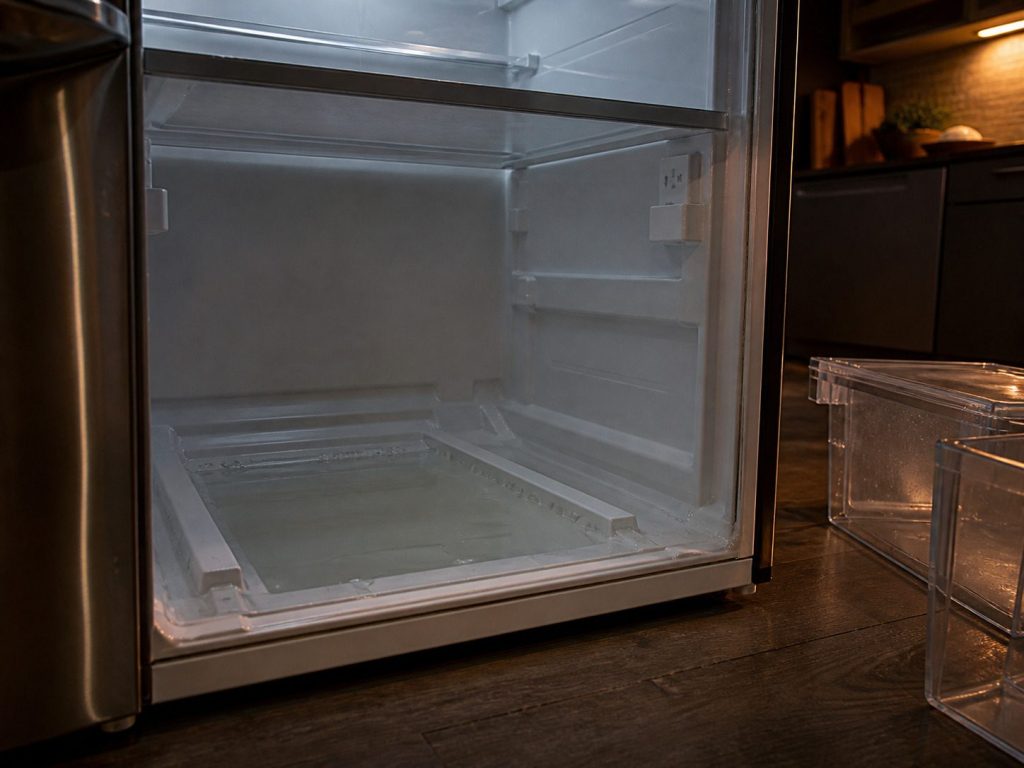
Water in the crisper, or on the floor Refrigerator leaking water
Where the water lands is rarely where it comes from. There are only four realistic sources on these cabinets, and telling them apart is quick once you know where to look — which is why this is one of the symptoms most worth describing carefully on the phone.
- Water inside and water outside are different problems
- A blocked defrost drain is the commonest cause
- In this climate condensation is a real answer
-
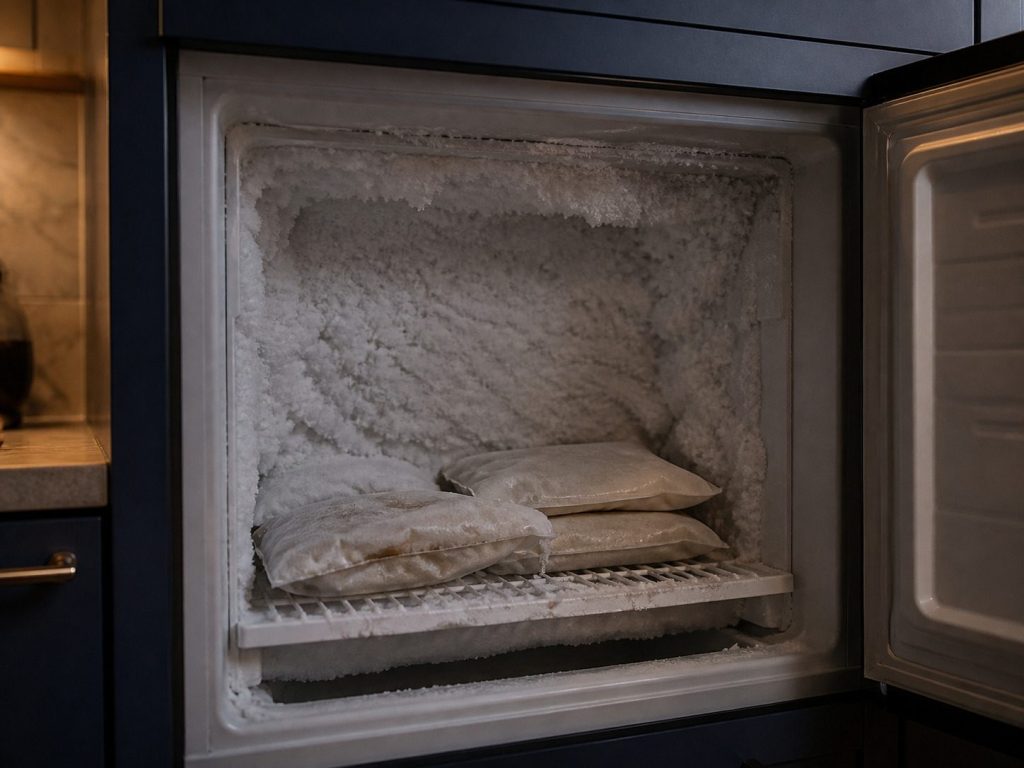
More ice than there should be, and it keeps coming back Frost building up in the freezer
The first question is which kind of freezer you have, because on one of them frost is the design. A manual-defrost chest freezer is supposed to accumulate it; an automatic-defrost upright is not, and on that one the frost is telling you something.
- On a chest freezer this is normal
- On an automatic-defrost cabinet it is not
- Where the frost sits tells you which problem it is
-
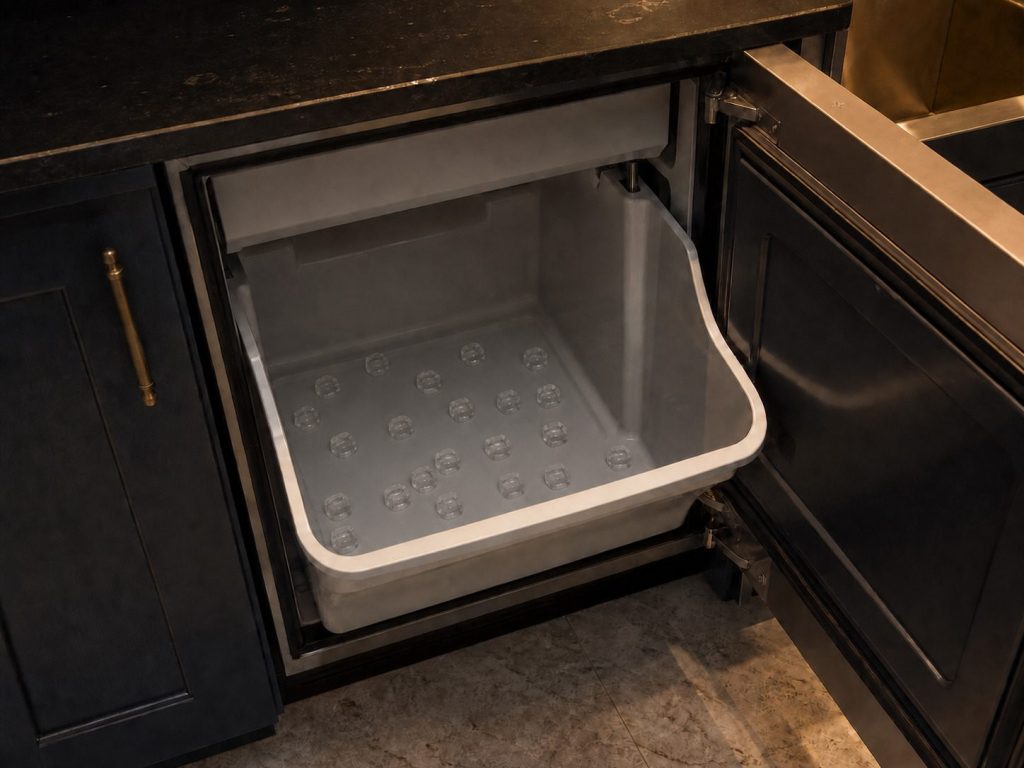
It still works — there is just less of it every month Standalone ice maker making less ice
A dedicated ice machine rarely stops. It declines, quietly, over a year, and most households notice only when they run out at a party. On this water the reason is almost always mineral collecting on the surfaces the machine depends on, and that is preventable.
- Decline rather than failure is the signature
- No maker publishes a code table for these
- Which stage the cycle stops at is the diagnosis
-
Standing water in the bottom after a finished cycle Dishwasher not draining
Three manufacturers built the Kenmore dishwashers in South Florida kitchens and all three publish a code for this, in three different alphabets. Which one you are reading decides which table it means something in — and a code read against the wrong maker points confidently at the wrong part.
- A little water in the sump is normal
- The disposer plug is free to check and often the answer
- Three builders, three different codes for one condition
If your code is not here
This is what the manufacturers publish, not everything the appliance can log
Their own documentation says as much. Several of these companies keep service-level codes that never reach a consumer page, and one of them names fourteen refrigerator codes without defining any of them. Characters on your display that are absent from this page are not imaginary — they are undocumented publicly, and their meaning has to be established at the appliance.
Give us three digits from the plate and a description of the behavior, and we will say what it commonly proves to be. Those digits identify the company that built the machine, which is where everything on this site begins.
Before you call
Questions about codes
Is this code a Kenmore code?
No. Kenmore manufactures nothing, so every code on an appliance wearing this badge belongs to the company that built it. That is why each page here names the manufacturer and links to the document the meaning was read from.
Will unplugging it clear the code?
Often, and several of these manufacturers ask for exactly that — thirty seconds at the breaker is Frigidaire's own first step on a whole family of codes. A code that returns immediately after a full power cycle is not a glitch. Photograph it before you clear it.
My machine has no display, only lights.
Then the lights are the code. Whirlpool publishes flashing-light patterns that correspond to its numbered codes, so counting the flashes and the pauses gives you the same information. Tell us the pattern when you call.
I found a longer list of Kenmore codes somewhere else.
Then some of it was written rather than read. We publish what the manufacturers publish and nothing else, and we name the document each entry came from. Where a maker names a code and does not define it, we say that instead of filling in the gap.
In more detail
What Kenmore repair actually involves in Miami
Why every code here names a manufacturer
Because the code belongs to the manufacturer and not to the badge. Kenmore commissioned appliances from Whirlpool, LG, Frigidaire, GE, Broan, Roper and Bosch, and each of those companies wrote its own diagnostic language. They overlap: several use an F followed by a number, several use two letters, and several use PF for a power failure. A code read against the wrong table is a confident answer pointing at the wrong component.
Where each family came from
The Whirlpool entries were read from the manufacturer’s own product-help site. The LG entries come from LG-hosted owner’s manuals, with the manual’s exact wording where the manual carried it, plus LG’s own help library. The Frigidaire entries come from Electrolux North America’s own owner support system. No repair blog, forum or parts-store list is a source anywhere on this site.
Codes and signals are different things
39 of the entries here are not errors at all. Power failure notices, control locks, Sabbath and demonstration modes, filter reminders and tub-clean alarms are all published in the same tables as genuine problems, and mistaking one for the other is how a working appliance gets a service call. They are labeled separately for that reason.
What we do with a code
Read it against the right company’s table, then confirm it at the appliance. A code names a circuit rather than a component, and the measurement is what turns one into the other. Send the characters and three digits from the plate, and a likely part can generally be named before anybody sets off.
The characters on the display, and three digits from the plate.
Between them we can generally name a likely part before arriving. The figure itself is settled once somebody has seen the appliance.
This article is based on:
- Official manufacturer documentation
- Internal repair procedures
- Technician repair history
- Company quality standards